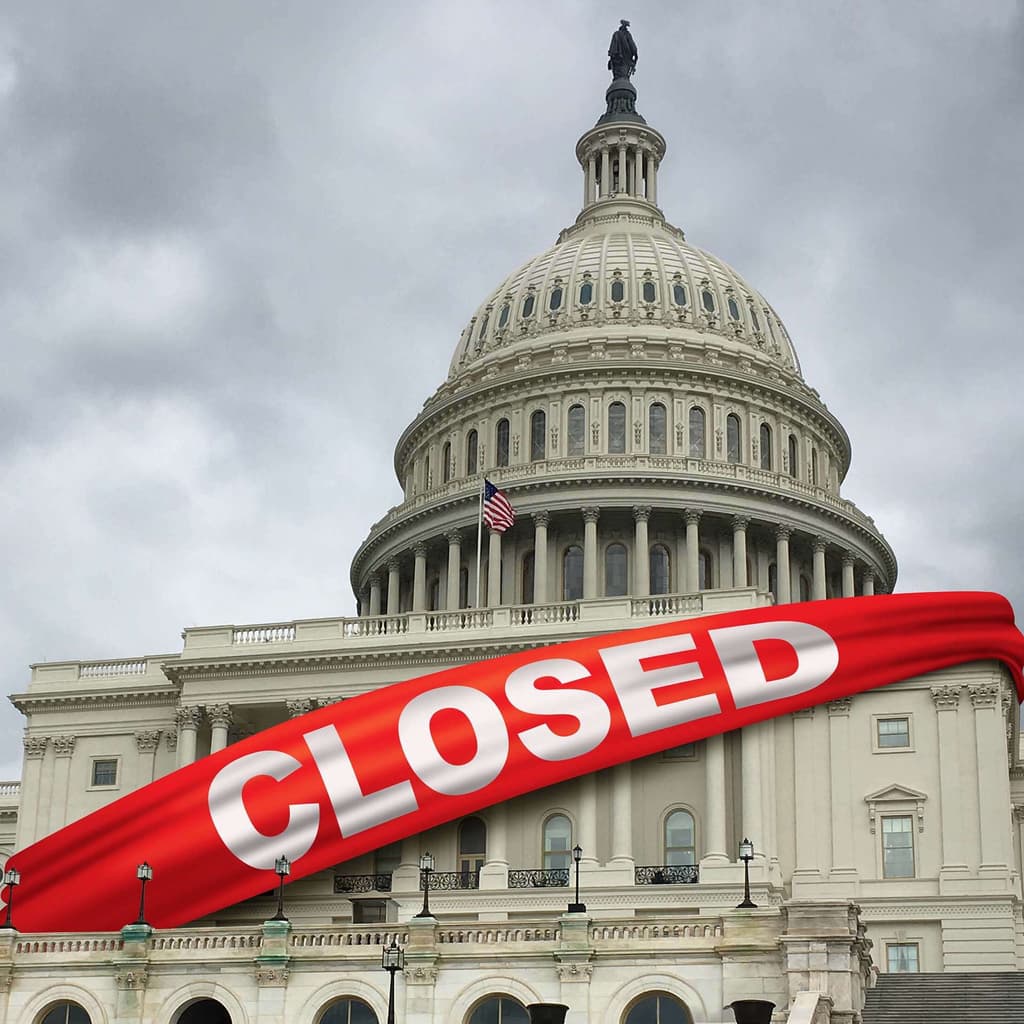
icon for Government shutdown by October 1?

Government shutdown by October 1?

icon for Government shutdown by October 1?

Government shutdown by October 1?

61% chance
Polymarket
NEW
61% chance
Polymarket
NEW
This market will resolve to "Yes" if the United States federal government enters a shutdown due to a lapse in appropriations by the specified date, 11:59 PM ET. Otherwise, this market will resolve to "No". A U.S. federal government shutdown is considered to have gone into effect when there is a lapse in appropriations that results in federal government agencies suspending non-excepted operations, typically including the furlough of non-excepted federal employees. A lapse in appropriations occurs when Congress fails to enact, or the President fails to sign into law, legislation providing funding authority for federal government operations by an applicable deadline, resulting in a funding lapse. A lapse in appropriations where no federal agencies cease or suspend non-excepted operations will not qualify as a shutdown. Partial shutdowns qualify. A shutdown affecting one or more, but not all, federal agencies constitutes a shutdown. The following will qualify as a shutdown: - An official directive from the Office of Management and Budget (OMB) ordering heads of affected agencies to execute shutdown plans (e.g., an instruction to "execute plans for an orderly shutdown") that is in effect by the specified date and time - An official operating status published by the U.S. Office of Personnel Management (OPM) indicating that, due to a lapse in appropriations, federal government operations are suspended, reduced, or vary by agency (e.g., a notice that "due to a partial lapse in appropriations, Federal Government operations vary by agency") The following will not qualify as a shutdown: - A technical lapse in appropriations where OMB or other authorized authority directs agencies to continue normal or substantially normal operations - Government closures or operating status changes resulting solely from Federal holidays, inclement weather, natural disasters, or other emergencies, unless such closures coincide with a qualifying shutdown caused by a lapse in appropriations The primary resolution source for this market will be official information from the United States government, including the U.S. Office of Personnel Management (OPM); however, a consensus of credible reporting may also be used.Congress faces the annual deadline to enact the 12 FY2027 appropriations bills before funding lapses at the end of September, yet the House Appropriations Committee only began advancing key measures such as Defense, Homeland Security, and Labor-HHS-Education in early June. This early-stage progress on subcommittee and full-committee markups, following repeated short-term continuing resolutions and partial shutdowns during the FY2026 cycle, supports the narrow trader consensus against an immediate lapse. Competitive balance stems from the need for bipartisan agreement in a divided Congress, where disputes over spending levels, policy riders, or targeted priorities like border security could still delay final passage. Scheduled floor action, potential omnibus negotiations, or a clean CR extension before the August recess represent the main variables that could shift implied probabilities in either direction.

This market will resolve to "Yes" if the United States federal government enters a shutdown due to a lapse in appropriations by the specified date, 11:59 PM ET. Otherwise, this market will resolve to "No".

A U.S. federal government shutdown is considered to have gone into effect when there is a lapse in appropriations that results in federal government agencies suspending non-excepted operations, typically including the furlough of non-excepted federal employees.

A lapse in appropriations occurs when Congress fails to enact, or the President fails to sign into law, legislation providing funding authority for federal government operations by an applicable deadline, resulting in a funding lapse. A lapse in appropriations where no federal agencies cease or suspend non-excepted operations will not qualify as a shutdown.

Partial shutdowns qualify. A shutdown affecting one or more, but not all, federal agencies constitutes a shutdown.

The following will qualify as a shutdown:

- An official directive from the Office of Management and Budget (OMB) ordering heads of affected agencies to execute shutdown plans (e.g., an instruction to "execute plans for an orderly shutdown") that is in effect by the specified date and time
- An official operating status published by the U.S. Office of Personnel Management (OPM) indicating that, due to a lapse in appropriations, federal government operations are suspended, reduced, or vary by agency (e.g., a notice that "due to a partial lapse in appropriations, Federal Government operations vary by agency")

The following will not qualify as a shutdown:

- A technical lapse in appropriations where OMB or other authorized authority directs agencies to continue normal or substantially normal operations
- Government closures or operating status changes resulting solely from Federal holidays, inclement weather, natural disasters, or other emergencies, unless such closures coincide with a qualifying shutdown caused by a lapse in appropriations

The primary resolution source for this market will be official information from the United States government, including the U.S. Office of Personnel Management (OPM); however, a consensus of credible reporting may also be used.
Volume
$39
End Date
Oct 2, 2026
Market Opened
Jun 10, 2026, 12:27 PM ET
This market will resolve to "Yes" if the United States federal government enters a shutdown due to a lapse in appropriations by the specified date, 11:59 PM ET. Otherwise, this market will resolve to "No". A U.S. federal government shutdown is considered to have gone into effect when there is a lapse in appropriations that results in federal government agencies suspending non-excepted operations, typically including the furlough of non-excepted federal employees. A lapse in appropriations occurs when Congress fails to enact, or the President fails to sign into law, legislation providing funding authority for federal government operations by an applicable deadline, resulting in a funding lapse. A lapse in appropriations where no federal agencies cease or suspend non-excepted operations will not qualify as a shutdown. Partial shutdowns qualify. A shutdown affecting one or more, but not all, federal agencies constitutes a shutdown. The following will qualify as a shutdown: - An official directive from the Office of Management and Budget (OMB) ordering heads of affected agencies to execute shutdown plans (e.g., an instruction to "execute plans for an orderly shutdown") that is in effect by the specified date and time - An official operating status published by the U.S. Office of Personnel Management (OPM) indicating that, due to a lapse in appropriations, federal government operations are suspended, reduced, or vary by agency (e.g., a notice that "due to a partial lapse in appropriations, Federal Government operations vary by agency") The following will not qualify as a shutdown: - A technical lapse in appropriations where OMB or other authorized authority directs agencies to continue normal or substantially normal operations - Government closures or operating status changes resulting solely from Federal holidays, inclement weather, natural disasters, or other emergencies, unless such closures coincide with a qualifying shutdown caused by a lapse in appropriations The primary resolution source for this market will be official information from the United States government, including the U.S. Office of Personnel Management (OPM); however, a consensus of credible reporting may also be used.
This market will resolve to "Yes" if the United States federal government enters a shutdown due to a lapse in appropriations by the specified date, 11:59 PM ET. Otherwise, this market will resolve to "No". A U.S. federal government shutdown is considered to have gone into effect when there is a lapse in appropriations that results in federal government agencies suspending non-excepted operations, typically including the furlough of non-excepted federal employees. A lapse in appropriations occurs when Congress fails to enact, or the President fails to sign into law, legislation providing funding authority for federal government operations by an applicable deadline, resulting in a funding lapse. A lapse in appropriations where no federal agencies cease or suspend non-excepted operations will not qualify as a shutdown. Partial shutdowns qualify. A shutdown affecting one or more, but not all, federal agencies constitutes a shutdown. The following will qualify as a shutdown: - An official directive from the Office of Management and Budget (OMB) ordering heads of affected agencies to execute shutdown plans (e.g., an instruction to "execute plans for an orderly shutdown") that is in effect by the specified date and time - An official operating status published by the U.S. Office of Personnel Management (OPM) indicating that, due to a lapse in appropriations, federal government operations are suspended, reduced, or vary by agency (e.g., a notice that "due to a partial lapse in appropriations, Federal Government operations vary by agency") The following will not qualify as a shutdown: - A technical lapse in appropriations where OMB or other authorized authority directs agencies to continue normal or substantially normal operations - Government closures or operating status changes resulting solely from Federal holidays, inclement weather, natural disasters, or other emergencies, unless such closures coincide with a qualifying shutdown caused by a lapse in appropriations The primary resolution source for this market will be official information from the United States government, including the U.S. Office of Personnel Management (OPM); however, a consensus of credible reporting may also be used.Congress faces the annual deadline to enact the 12 FY2027 appropriations bills before funding lapses at the end of September, yet the House Appropriations Committee only began advancing key measures such as Defense, Homeland Security, and Labor-HHS-Education in early June. This early-stage progress on subcommittee and full-committee markups, following repeated short-term continuing resolutions and partial shutdowns during the FY2026 cycle, supports the narrow trader consensus against an immediate lapse. Competitive balance stems from the need for bipartisan agreement in a divided Congress, where disputes over spending levels, policy riders, or targeted priorities like border security could still delay final passage. Scheduled floor action, potential omnibus negotiations, or a clean CR extension before the August recess represent the main variables that could shift implied probabilities in either direction.

This market will resolve to "Yes" if the United States federal government enters a shutdown due to a lapse in appropriations by the specified date, 11:59 PM ET. Otherwise, this market will resolve to "No".

A U.S. federal government shutdown is considered to have gone into effect when there is a lapse in appropriations that results in federal government agencies suspending non-excepted operations, typically including the furlough of non-excepted federal employees.

A lapse in appropriations occurs when Congress fails to enact, or the President fails to sign into law, legislation providing funding authority for federal government operations by an applicable deadline, resulting in a funding lapse. A lapse in appropriations where no federal agencies cease or suspend non-excepted operations will not qualify as a shutdown.

Partial shutdowns qualify. A shutdown affecting one or more, but not all, federal agencies constitutes a shutdown.

The following will qualify as a shutdown:

- An official directive from the Office of Management and Budget (OMB) ordering heads of affected agencies to execute shutdown plans (e.g., an instruction to "execute plans for an orderly shutdown") that is in effect by the specified date and time
- An official operating status published by the U.S. Office of Personnel Management (OPM) indicating that, due to a lapse in appropriations, federal government operations are suspended, reduced, or vary by agency (e.g., a notice that "due to a partial lapse in appropriations, Federal Government operations vary by agency")

The following will not qualify as a shutdown:

- A technical lapse in appropriations where OMB or other authorized authority directs agencies to continue normal or substantially normal operations
- Government closures or operating status changes resulting solely from Federal holidays, inclement weather, natural disasters, or other emergencies, unless such closures coincide with a qualifying shutdown caused by a lapse in appropriations

The primary resolution source for this market will be official information from the United States government, including the U.S. Office of Personnel Management (OPM); however, a consensus of credible reporting may also be used.
Volume
$39
End Date
Oct 2, 2026
Market Opened
Jun 10, 2026, 12:27 PM ET
This market will resolve to "Yes" if the United States federal government enters a shutdown due to a lapse in appropriations by the specified date, 11:59 PM ET. Otherwise, this market will resolve to "No". A U.S. federal government shutdown is considered to have gone into effect when there is a lapse in appropriations that results in federal government agencies suspending non-excepted operations, typically including the furlough of non-excepted federal employees. A lapse in appropriations occurs when Congress fails to enact, or the President fails to sign into law, legislation providing funding authority for federal government operations by an applicable deadline, resulting in a funding lapse. A lapse in appropriations where no federal agencies cease or suspend non-excepted operations will not qualify as a shutdown. Partial shutdowns qualify. A shutdown affecting one or more, but not all, federal agencies constitutes a shutdown. The following will qualify as a shutdown: - An official directive from the Office of Management and Budget (OMB) ordering heads of affected agencies to execute shutdown plans (e.g., an instruction to "execute plans for an orderly shutdown") that is in effect by the specified date and time - An official operating status published by the U.S. Office of Personnel Management (OPM) indicating that, due to a lapse in appropriations, federal government operations are suspended, reduced, or vary by agency (e.g., a notice that "due to a partial lapse in appropriations, Federal Government operations vary by agency") The following will not qualify as a shutdown: - A technical lapse in appropriations where OMB or other authorized authority directs agencies to continue normal or substantially normal operations - Government closures or operating status changes resulting solely from Federal holidays, inclement weather, natural disasters, or other emergencies, unless such closures coincide with a qualifying shutdown caused by a lapse in appropriations The primary resolution source for this market will be official information from the United States government, including the U.S. Office of Personnel Management (OPM); however, a consensus of credible reporting may also be used.

Beware of external links.

Frequently Asked Questions

"Government shutdown by October 1?" is a prediction market on Polymarket where traders buy and sell "Yes" or "No" shares based on whether they believe this event will happen. The current crowd-sourced probability is 45% for "Yes." For example, if "Yes" is priced at 45¢, the market collectively assigns a 45% chance that this event will occur. These odds shift continuously as traders react to new developments and information. Shares in the correct outcome are redeemable for $1 each upon market resolution.

"Government shutdown by October 1?" is a newly created market on Polymarket, launched on Jun 10, 2026. As an early market, this is your opportunity to be among the first traders to set the odds and establish the market's initial price signals. You can also bookmark this page to track volume and trading activity as the market gains traction over time.

To trade on "Government shutdown by October 1?," simply choose whether you believe the answer is "Yes" or "No." Each side has a current price that reflects the market's implied probability. Enter your amount and click "Trade." If you buy "Yes" shares and the outcome resolves as "Yes," each share pays out $1. If it resolves as "No," your "Yes" shares pay $0. You can also sell your shares at any time before resolution if you want to lock in a profit or cut a loss.

The current probability for "Government shutdown by October 1?" is 45% for "Yes." This means the Polymarket crowd currently believes there is a 45% chance that this event will occur. These odds update in real-time based on actual trades, providing a continuously updated signal of what the market expects to happen.

The resolution rules for "Government shutdown by October 1?" define exactly what needs to happen for each outcome to be declared a winner — including the official data sources used to determine the result. You can review the complete resolution criteria in the "Rules" section on this page above the comments. We recommend reading the rules carefully before trading, as they specify the precise conditions, edge cases, and sources that govern how this market is settled.