
Miguel Díaz-Canel remains Cuba’s president and Communist Party first secretary under a second constitutional term extending to 2028, with no scheduled National Assembly sessions, party congresses, or formal succession processes before late June 2026. External pressure from the Trump administration—including sanctions, an oil blockade, and reported demands during bilateral talks for his removal—has intensified amid fuel shortages and power outages, yet Cuban officials have categorically rejected any leadership change as a negotiation item. Díaz-Canel has publicly dismissed resignation prospects, framing talks as early-stage efforts to address differences while preserving sovereignty. Recent June 2026 announcements of economic reforms granting greater enterprise autonomy and private-sector scope reflect attempts to stabilize the situation without altering the top leadership. The regime’s institutional design and absence of visible internal challenges continue to anchor trader assessments of continuity through the resolution window.
Experimental AI-generated summary referencing Polymarket data. This is not trading advice and plays no role in how this market resolves. · UpdatedDíaz-Canel emphasizes unity and resilience amid crisis
December 31 rises to 53%1%
In a public statement, Díaz-Canel called for unity and resilience to overcome Cuba's challenges, rejecting surrender despite US pressure and sanctions. This reaffirmation of his leadership likely stabilized market expectations for his continued tenure through mid-2026.
Díaz-Canel announces economic reforms amid crisis and US pressure
December 31 rises to 56%4%
Facing severe economic crisis and U.S. pressure, Díaz-Canel announced reforms to liberalize Cuba's economy, signaling attempts to stabilize the regime without political concessions. This tempered market expectations for imminent leadership change by year-end.
US sanctions Cuban President Díaz-Canel amid escalating regime change efforts
June 30 dips to 9%2%
The Trump administration imposed new sanctions targeting Díaz-Canel and other Cuban leaders, signaling a continued campaign for regime change. Market prices for Díaz-Canel's removal by June 30 further declined, reflecting skepticism about near-term leadership change despite mounting pressure.
U.S. imposes sanctions on Cuban President Miguel Díaz-Canel and associates
June 30 dips to 9%4%
The Trump administration imposed sanctions on Díaz-Canel, his wife, and other key figures to increase pressure on Cuba's leadership amid ongoing economic and diplomatic tensions. This action reinforced market perceptions of heightened risk but did not lead to immediate removal, causing a decline in the June 30 outcome probability.
U.S. imposes sanctions on Díaz-Canel and associates to pressure Cuban leadership
The United States sanctioned Díaz-Canel, his wife, and other key figures, escalating pressure on Cuba's leadership and impacting market perceptions of his political vulnerability before mid-2026.
US Treasury sanctions Cuban President Díaz-Canel and family
December 31 jumps to 59%5%
The US Treasury Department imposed sanctions on Díaz-Canel, his family, and key Cuban entities, escalating economic pressure and causing a notable market price increase for the December 31 outcome.
US Treasury sanctions Cuban President Díaz-Canel and family
June 30 drops to 11%5%
The U.S. Treasury Department imposed sanctions on Díaz-Canel, his wife, stepson, and key Cuban entities, intensifying economic pressure on Cuba's leadership. This action reinforced market perceptions of sustained external pressure but did not immediately signal imminent removal.
US imposes sanctions on Cuban President Miguel Díaz-Canel and family
June 30 drops to 10%6%
The United States imposed new sanctions on Díaz-Canel, his wife, and other senior Cuban figures, escalating pressure on the Cuban leadership. This move was seen as a step to increase leverage for regime change, affecting market prices especially for the June 30 outcome.
United States Imposes Direct Sanctions on Cuban President Miguel Díaz-Canel
December 31 jumps to 59%8%
The U.S. government announced direct sanctions against President Miguel Díaz-Canel, his wife, and other key figures, escalating diplomatic tensions and causing a sharp rebound in the December 31 contract.
US imposes sanctions on Díaz-Canel and family to pressure Cuban leadership
December 31 jumps to 59%6%
The US Treasury imposed sanctions on Díaz-Canel, his wife, and relatives of former President Raúl Castro, intensifying economic and political pressure on Cuba's top leadership amid ongoing crisis and negotiations.
Cuban government condemns U.S. sanctions and threats
December 31 rises to 53%2%
Cuban President Díaz-Canel and Foreign Minister Bruno Rodríguez publicly rejected U.S. sanctions and threats, framing them as illegitimate and reaffirming Díaz-Canel's resolve to remain in power despite mounting external pressure.
U.S. Treasury imposes sanctions on Díaz-Canel and close associates
December 31 drops to 51%13%
The U.S. Office of Foreign Assets Control added Díaz-Canel, his wife, stepson, and key Cuban entities to the Specially Designated Nationals list, intensifying economic pressure and signaling a push for regime change, though Díaz-Canel remained in power.
US sanctions Díaz-Canel, family, and key Cuban entities
June 30 drops to 9%11%
The US Treasury Department imposed sanctions on Díaz-Canel, his family, and military-linked entities, escalating economic pressure but with no indication of imminent leadership change, which contributed to a drop in short-term removal odds.
US imposes sanctions on Cuban President Miguel Díaz-Canel and associates
The Trump administration imposed sanctions on Díaz-Canel, his wife, and other key figures, escalating pressure on Cuba's leadership. This move reinforced market expectations of political instability but did not immediately affect Díaz-Canel's position.
US imposes sanctions on Cuban President Miguel Díaz-Canel and associates
December 31 jumps to 59%8%
The US Treasury sanctioned Díaz-Canel, his wife, and other key figures, escalating pressure on Cuba's leadership but Díaz-Canel remained in power, causing mixed market reactions.
U.S. Treasury announces new sanctions targeting Cuba’s political leadership
December 31 drops to 52%10%
On June 4, 2026, the U.S. Treasury Department announced a new round of sanctions against Díaz-Canel, Alejandro Castro Espín, and key Cuban entities, marking a significant escalation in the U.S. campaign for regime change and increasing market uncertainty about Díaz-Canel’s hold on power.
U.S. imposes new sanctions on Díaz-Canel and associates to pressure Cuban leadership
December 31 drops to 56%6%
The Trump administration sanctioned Díaz-Canel, his wife, and close associates, escalating pressure on Cuba's leadership but drawing condemnation from Havana, which contributed to market uncertainty and a slight price decline.
US Treasury sanctions Miguel Díaz-Canel and family
December 31 drops to 52%10%
The US Treasury Department added Díaz-Canel, his wife, and key Cuban entities to the sanctions list, intensifying economic pressure on Cuba's leadership. This action underscored the US commitment to regime change, influencing market sentiment near the analysis end date.
US imposes sanctions on Díaz-Canel and associates to pressure Cuban leadership
June 30 dips to 8%3%
The US Treasury Department sanctioned Díaz-Canel, his wife, and other Cuban officials, escalating economic pressure on Cuba's leadership. This move reinforced the US stance but did not lead to immediate leadership change, reflected in a slight market decline for the June 30 outcome.
US imposes new sanctions on Díaz-Canel and associates
December 31 dips to 60%3%
The US Treasury Department sanctioned Díaz-Canel, his wife, and other Cuban officials, escalating pressure on Cuba's leadership amid ongoing crises. This move was seen as a signal of sustained US intent to destabilize Díaz-Canel's hold on power, affecting market sentiment.
U.S. Treasury sanctions Cuban President Díaz-Canel and family, escalating pressure
December 31 jumps to 60%8%
The U.S. Treasury Department added Díaz-Canel, his family, and key Cuban entities to the Specially Designated Nationals list, cutting them off from the U.S. financial system and intensifying economic pressure without triggering leadership change.
Díaz-Canel remains Cuba's leader amid economic collapse and limited reforms
December 31 rises to 66%2%
Despite economic collapse and social unrest, Díaz-Canel continues to lead Cuba with limited reforms, maintaining his position amid external and internal pressures.
Díaz‑Canel rallies supporters, says talks with U.S. continue
December 31 dips to 61%3%
EL PAÍS featured Díaz‑Canel at a rally urging solidarity while stating negotiations were ongoing, signaling no imminent resignation. The market responded with a modest pull‑back in “Yes” odds for December 31 (from 64 % to 61 % on 2 Jun).
Díaz-Canel continues public appearances amid worsening Cuban crisis
June 30 drops to 8%8%
Despite severe economic and energy crises, Díaz-Canel maintained public leadership roles, signaling regime stability and reducing market expectations of imminent removal by mid-2026.
US intensifies calls for Díaz-Canel's removal amid increased economic pressure
December 31 rises to 60%3%
The Trump administration publicly pushed for Díaz-Canel's removal as part of negotiations, coinciding with heightened sanctions and economic strain, influencing market sentiment.
FT reports U.S. officials insist on Díaz-Canel's resignation amid ongoing pressure
December 31 drops to 59%7%
Financial Times reported that American officials continue to press for Díaz-Canel's resignation as part of efforts to induce political change in Cuba, sustaining market uncertainty about his tenure.
FT: U.S. insists on removal of Cuban president as deal condition
December 31 dips to 61%3%
The Financial Times published a story that U.S. officials were insisting on Díaz‑Canel’s removal as a condition for any agreement. The publication caused the “Yes” price for December 31 to drop sharply from 64 % on 26 May to 61 % on 2 Jun, and pushed the June 30 odds down to 10 % by 2 Jun.
U.S. officials insist on Díaz-Canel's resignation as part of Cuba deal
June 30 drops to 13%6%
Financial Times and other sources reported continued U.S. insistence on Díaz-Canel stepping down to advance negotiations, but no indication of imminent removal, contributing to market decline in removal probability by June 30.
US officials reiterate insistence on Díaz-Canel's resignation
June 30 drops to 16%8%
Financial Times and Pravda USA reported that US officials continued to insist on Díaz-Canel's removal as part of any agreement with Cuba, maintaining diplomatic pressure. Despite this, no removal occurred, and market prices for removal by June 30 declined further.
U.S. administration insists on removing Díaz-Canel as part of any agreement with Havana
December 31 jumps to 65%11%
The Financial Times and Pravda Trump reported that the U.S. administration insists on removing Cuban President Miguel Díaz-Canel from power as part of any agreement with Havana, reinforcing market expectations for his removal by the end of 2026.
US intensifies calls to remove Cuban President Díaz-Canel
December 31 jumps to 66%11%
The Trump administration publicly insisted on changing Cuba's leader as part of any agreement, increasing political pressure and market speculation about his potential removal by year-end.
Financial Times reports sustained U.S. insistence on Díaz-Canel's resignation
December 31 jumps to 62%5%
The Financial Times highlighted ongoing U.S. diplomatic pressure demanding Díaz-Canel's resignation as part of any agreement with Havana, maintaining market focus on potential leadership change by year-end despite Díaz-Canel's public defiance.
Financial Times reports U.S. insists on Díaz-Canel's removal in Cuba talks
June 30 drops to 16%7%
The Financial Times noted that the Trump administration continues to demand Díaz-Canel's resignation as part of any agreement with Havana, maintaining diplomatic pressure but with no immediate removal, contributing to declining market odds for removal by June 30.
Trump administration reiterates intent to remove Díaz-Canel amid ongoing pressure
June 30 drops to 16%6%
The Trump administration publicly insisted on Díaz-Canel's removal as part of any agreement with Havana, sustaining market speculation but with diminishing probability for removal by June 30.
U.S. insists on removing Díaz-Canel as part of any agreement with Havana
December 31 jumps to 65%6%
The Trump administration publicly reiterated its insistence on Díaz-Canel's removal to facilitate economic reforms, maintaining pressure on the Cuban leadership and influencing market prices upward for December 31 and downward for June 30.
US administration insists on removing Díaz-Canel as part of Cuba deal
June 30 drops to 10%10%
The Financial Times and other sources reported that the Trump administration demanded Díaz-Canel's removal as a condition for any agreement with Havana, reinforcing market expectations of his ouster by mid-2026.
U.S. intensifies calls to remove Díaz-Canel amid sanctions and talks
December 31 jumps to 66%6%
The Trump administration reiterated its demand for Díaz-Canel's removal as part of any agreement with Cuba, coinciding with increased economic pressure and sanctions, which briefly raised market odds for his removal by year-end.
U.S. Wants to Remove Cuban President Díaz-Canel During Negotiations
December 31 jumps to 66%5%
The Trump administration reportedly wants to remove Cuban President Miguel Díaz-Canel as part of ongoing negotiations, according to The New York Times.
U.S. Authorities Insist on Removing Cuban President Díaz-Canel
The administration insists on removing the Cuban president as part of any agreement, with the Financial Times reporting on the ongoing pressure. This reinforced the diplomatic narrative.
U.S. insists on Díaz-Canel removal as part of any Cuba agreement
December 31 jumps to 65%6%
The Financial Times reported that the Trump administration continued to demand Díaz-Canel's removal as a condition for any deal with Havana, maintaining pressure on Cuban leadership and affecting market probabilities.
US intensifies efforts to remove Cuban President Díaz-Canel
December 31 jumps to 65%9%
The Trump administration publicly pushed for Díaz-Canel's removal as part of broader pressure on Cuba, increasing market speculation about his potential ouster by the end of 2026.
US insists on Díaz-Canel removal as part of Cuba agreement
December 31 jumps to 66%6%
Reports from the Financial Times and other outlets confirmed the Trump administration's continued insistence on Díaz-Canel's removal as a precondition for any deal with Havana, coinciding with increased sanctions and economic pressure on Cuba.
Reports: US insists on removing Díaz-Canel as part of any agreement with Cuba
Financial Times reported that the US administration demands Díaz-Canel's removal in negotiations with Havana, reflecting heightened external pressure that could influence market perceptions of his leadership's stability by year-end.
US officials insist on Díaz-Canel's removal as part of Cuba agreement
December 31 jumps to 66%6%
The Financial Times reported that current and former U.S. officials continue to insist on the removal of Cuban President Miguel Díaz-Canel as a condition for any agreement with Havana, reinforcing market expectations for his removal by the end of 2026.
American officials publicly insist on Díaz-Canel's resignation
December 31 rises to 58%3%
The Financial Times reported that U.S. officials reiterated their demand for Miguel Díaz-Canel to resign as part of any agreement with Cuba, maintaining pressure on the Cuban leader and influencing market perceptions of his potential removal by year-end.
U.S. officials insist on Díaz-Canel's resignation as part of Cuba agreement
December 31 jumps to 62%7%
The Financial Times and other outlets reported that U.S. authorities reiterated demands for Díaz-Canel's removal as a condition for any agreement with Cuba, reinforcing market speculation and increasing the December 31 outcome price.
U.S. officials intensify calls for Díaz-Canel's resignation
December 31 jumps to 69%10%
American officials publicly insisted on Díaz-Canel's resignation, maintaining diplomatic pressure and keeping market speculation about his removal alive, particularly for the December 31 outcome.
Reports Confirm U.S. Insists on Removing Díaz-Canel in Havana Talks
December 31 jumps to 66%8%
Bilateral negotiations remained stalled as the Trump administration continued to insist on changing the Cuban leader as part of any economic agreement, keeping pressure high on the year-end contract.
US administration insists on Díaz-Canel removal as part of any agreement
December 31 jumps to 66%6%
The Financial Times and other sources reported that the US administration continues to demand Díaz-Canel's removal as a precondition for agreements with Havana, maintaining high diplomatic pressure and market uncertainty.
Financial Times reports U.S. insists on Díaz-Canel removal as part of any agreement
December 31 jumps to 60%5%
The Financial Times revealed that the U.S. administration continues to insist on Díaz-Canel's removal in negotiations with Havana, reinforcing market perceptions of sustained external pressure but no immediate removal.
Financial Times reports US insists on Díaz-Canel removal in Cuba talks
The Financial Times reported that US officials were firm on removing Díaz-Canel as part of any agreement with Havana, reinforcing market uncertainty and reflecting ongoing diplomatic pressure.
US administration insists on Díaz-Canel's removal as part of any agreement
June 30 dips to 16%3%
The Financial Times reported that the Trump administration was firm on removing Díaz-Canel from power to advance negotiations with Havana, increasing market doubts about a near-term leadership change but also highlighting the political impasse.
US administration insists on removing Díaz-Canel as part of any agreement
December 31 jumps to 65%5%
The Financial Times reported that the US administration continues to demand Díaz-Canel's removal as a precondition for agreements with Havana, signaling sustained maximum pressure. This prolonged stance kept market probabilities for removal moderate but not high.
U.S. intensifies calls for Díaz-Canel's removal amid sanctions and stalled talks
December 31 rises to 59%3%
The U.S. administration reiterated its demand for Díaz-Canel's removal as part of any agreement with Cuba, coinciding with increased economic pressure and sanctions, which briefly raised market probabilities for his ouster by year-end.
US insists on removing Díaz-Canel as part of any agreement with Cuba
June 30 dips to 16%4%
The Financial Times reported that the Trump administration continued to insist on Díaz-Canel's removal as a precondition for any deal with Havana, maintaining high diplomatic pressure amid Cuba's worsening crisis. This sustained pressure influenced market sentiment, especially for the June 30 outcome.
U.S. intensifies pressure with sanctions on Díaz-Canel and Castro family members
December 31 rises to 62%2%
The U.S. imposed sanctions on Cuban President Miguel Díaz-Canel, his wife, stepson, and members of the Castro family, escalating pressure on Cuba's leadership and reinforcing market expectations for his potential removal by the end of 2026.
US imposes sanctions on Cuban President Miguel Díaz-Canel and associates
December 31 rises to 66%1%
The US Treasury Department sanctioned Díaz-Canel, his wife, and other Cuban officials as part of escalating pressure on Cuba's leadership, reinforcing the US stance on regime change but without immediate impact on Díaz-Canel's position.
Díaz-Canel leads rally supporting Raúl Castro amid political tensions
December 31 jumps to 73%11%
Díaz-Canel participated in a public rally supporting former President Raúl Castro, signaling regime solidarity amid increasing US pressure and internal challenges. This event briefly boosted confidence in his continued leadership.
U.S. indicts Raúl Castro amid escalating Cuba tensions
December 31 jumps to 66%6%
The U.S. Department of Justice indicted Raúl Castro, increasing political pressure on Cuba's leadership and indirectly affecting perceptions of Díaz-Canel's stability.
Díaz-Canel highlights WHO recognition of Cuba’s maternal and child health
December 31 rises to 67%3%
Díaz-Canel emphasized Cuba’s healthcare achievements despite US sanctions, projecting government stability and resilience. This positive framing likely supported market confidence in his continued leadership through year-end.
U.S. announces further $6 million aid package for Cuba’s eastern provinces
December 31 jumps to 66%7%
The latest aid announcement coincided with the final price point of 66% for the December‑31 contract, reflecting continued speculation that U.S. pressure could eventually force Díaz‑Canel out.
Díaz‑Canel warns of worsening energy crisis as U.S. block deepens
December 31 jumps to 65%8%
A stark warning from Díaz‑Canel about the impact of U.S. oil blockades revived fears of regime instability, nudging the “December 31” price back up.
U.S. lifts some sanctions on Cuban oil imports after diplomatic talks
Partial sanction relief eased economic pressure, causing the June 30 price to fall further as the market viewed Díaz‑Canel’s position as more secure.
Cuban Vice Foreign Minister reiterates no formal dialogue with US on political leadership
December 31 rises to 60%4%
Carlos Fernández de Cossío reaffirmed that Cuba has no formal dialogue with the US regarding political leadership or Díaz-Canel's position, emphasizing Cuba's sovereignty and resilience amid sanctions. This reinforced market confidence in Díaz-Canel's continued tenure.
Humanitarian aid continues amid Cuba's ongoing energy crisis
December 31 rises to 59%1%
Continued international aid deliveries and Cuban government statements about overcoming hardships maintained moderate market confidence in Díaz-Canel's continued leadership, reflected in stable prices near 59%.
CIA Director John Ratcliffe meets Cuban officials amid high tensions
December 31 rises to 60%4%
High-level meetings between U.S. intelligence and Cuban officials occurred despite ongoing tensions over the U.S. energy blockade and Cuba's economic crisis, indicating complex diplomatic engagement but no immediate leadership change, affecting market sentiment.
Cuba runs out of fuel amid U.S. oil blockade, sparking widespread protests
Cuba's energy minister announced the country had run out of oil and diesel due to the U.S. blockade, leading to prolonged blackouts and rare protests across Havana, intensifying pressure on Díaz-Canel's government.
Nationwide blackouts and protests escalate in Cuba amid fuel shortages
December 31 jumps to 73%9%
Cuba experienced severe blackouts lasting up to 22 hours daily, sparking protests and highlighting the government's vulnerability, which influenced market perceptions of Díaz-Canel's stability.
Cuban President Díaz‑Canel decries U.S. “energy blockade” in televised address
June 30 jumps to 22%8%
The president’s public condemnation of the U.S. blockade reinforced his resolve to stay in power, slightly stabilising the June‑30 odds after the earlier plunge.
Cuban President Díaz‑Canel says Cuba will endure ‘complex’ U.S. aggression
December 31 rises to 59%3%
His public statement underscored ongoing tensions and reinforced market expectations that removal was still possible, keeping the December‑31 price steady at 59%.
Former Cuban economy minister sentenced to life for espionage
December 31 rises to 59%3%
The sentencing of a former economy minister for espionage highlighted internal government challenges but did not directly threaten Díaz-Canel's leadership, maintaining market stability.
Cuban government confirms no negotiations on political leadership with U.S.
Vice Foreign Minister Carlos Fernández de Cossío stated that Cuba's political system and Díaz-Canel's position are not negotiable with the U.S., reinforcing regime stability and affecting market expectations for leadership change.
Cuban government reports nationwide power grid collapse
June 30 jumps to 30%8%
A severe blackout intensified public discontent and raised speculation that Díaz‑Canel could be forced out, causing a brief rise in the Yes price for the June 30 outcome.
Cuban President Díaz-Canel denies political negotiations with U.S. amid sanctions
December 31 rises to 59%3%
Díaz-Canel reiterated that Cuba's political system and leadership are not negotiable with the U.S., signaling regime stability despite economic pressures, which tempered market expectations of his removal.
Cuban Deputy Foreign Minister denies any negotiation on political system or leadership
December 31 dips to 59%1%
Deputy Foreign Minister Carlos Fernández de Cossío stated that Cuba's political system and Díaz-Canel's position are not negotiable with the U.S., reinforcing regime stability and reducing market expectations of imminent leadership change.
Mexico pledges humanitarian aid to Cuba amid oil shipment suspensions
December 31 rises to 60%4%
Mexico's commitment to send humanitarian aid to Cuba amid halted oil shipments provided some relief to the island, slightly reducing immediate fears of regime collapse and affecting market probabilities.
Cuba releases 2,010 prisoners amid U.S. pressure
December 31 rises to 59%3%
The Cuban government announced a large prisoner release as a humanitarian gesture during Holy Week, amidst U.S. sanctions pressure, but denied any political negotiations involving Díaz-Canel's position.
Mexico pledges to send humanitarian aid to Cuba amid oil supply disruptions
December 31 rises to 60%4%
Mexico's commitment to send food and aid to Cuba provided some relief amid the energy blockade and economic crisis, slightly improving market confidence in Díaz-Canel's regime stability.
International humanitarian convoy arrives in Havana with food, medicine, and solar panels
December 31 jumps to 66%10%
The arrival of 20 tons of aid reduced immediate crisis pressures, causing the December‑31 price to rebound to 66% as market participants reassessed the likelihood of Díaz‑Canel’s removal.
Severe blackouts intensify as U.S. oil embargo persists
June 30 drops to 14%10%
Worsening energy shortages revived fears of regime collapse, pushing the June‑30 “Yes” price down to a low of 14% on May 5 before a rebound later in the month.
U.S. announces further sanctions targeting Cuban officials
December 31 rises to 57%1%
New sanctions aimed at senior officials raised fears of internal purges, causing a brief dip in the “December 31” contract.
Deepening energy crisis as U.S. blockades oil supplies
June 30 plunges to 14%21%
Reports of severe blackouts and fuel shortages after the U.S. blockade drove the June‑30 price down to a low of 14%, reflecting heightened expectations of regime strain.
Cuba faces deeper energy crisis after US blocks oil supply
December 31 drops to 56%8%
The worsening energy crisis due to US sanctions led to severe hardships for Cuban citizens, but Díaz-Canel's government remained in control, causing a slight dip in market confidence for leadership removal by December 31.
Cuba faces deepening energy crisis amid U.S. oil blockade, Díaz-Canel calls for sacrifices
June 30 drops to 17%7%
Díaz-Canel acknowledged the severe impact of the U.S. energy blockade and called for national resilience, but no indication of his removal emerged. The crisis increased economic pressure but did not translate into leadership change, lowering market odds for June 30.
US announces $6 million aid to Cuba amid deepening energy crisis
The US provided humanitarian aid to Cuba as the energy crisis worsened, reflecting ongoing tensions but also attempts at limited engagement, which slightly stabilized market perceptions though doubts about leadership change remained.
Cuba denies talks with U.S. after Trump threat, insists on sovereignty
President Díaz-Canel denied current talks with the U.S. and emphasized Cuba's sovereignty and refusal to negotiate political system changes, reinforcing his position and reducing market expectations of imminent removal.
Former economy minister sentenced to life for espionage, signaling internal purges
The high‑profile conviction suggested a crackdown on dissent, briefly lifting the December 31 price as traders saw increased internal pressure on Díaz‑Canel.
International solidarity meeting supports Cuba amid crisis
December 31 jumps to 62%5%
Díaz-Canel spoke at the International Meeting of Solidarity with Cuba, emphasizing resilience against U.S. aggression and reinforcing regime stability, which helped stabilize market confidence in his continued leadership.
Cuban energy crisis deepens as U.S. oil blockade continues
December 31 rises to 60%1%
The ongoing U.S. energy blockade worsened Cuba’s power outages and economic hardships, with Díaz-Canel calling for sacrifices, but no signs of his removal emerged, maintaining market uncertainty.
Raúl Castro publicly supports Díaz-Canel at May Day event
June 30 surges to 41%15%
Raúl Castro's first public appearance since December 2025 included visible support for Díaz-Canel, signaling regime stability and reinforcing market confidence that Díaz-Canel would remain in power through mid-2026.
Cuba confirms talks with U.S. government amid ongoing tensions
December 31 rises to 59%2%
Cuban President Díaz-Canel confirmed talks with the U.S. government, marking a rare openness despite ongoing sanctions and economic crisis, which introduced some uncertainty but no immediate leadership change.
U.S. announces $6 million in humanitarian aid to Cuba amid deepening energy crisis
June 30 drops to 17%7%
The U.S. provided humanitarian aid to Cuba while the island faced worsening energy shortages due to the U.S. blockade, maintaining pressure on Díaz-Canel's government but also showing some engagement, which influenced market perceptions of his political stability.
Cuban government releases 2,010 prisoners as humanitarian gesture
June 30 drops to 24%6%
The release was framed as a goodwill move amid U.S. pressure, slightly lowering the June‑30 “Yes” price to 24% on Apr 28.
Cuban government rejects political system negotiations with U.S., affirms Díaz-Canel's leadership
June 30 dips to 24%1%
Cuban officials publicly stated that the political system and Díaz-Canel's position are not negotiable with the U.S., signaling regime stability and reducing market odds of leadership change by June 30.
Cuba releases 2,010 prisoners amid U.S. pressure
December 31 dips to 54%2%
Cuba announced the release of over 2,000 prisoners as a humanitarian gesture during Holy Week, amidst intense U.S. sanctions and pressure, signaling attempts to ease tensions without leadership change.
Mexico pledges humanitarian aid to Cuba amid oil shipment suspensions
Mexico's commitment to send humanitarian aid to Cuba provided some relief amid the oil embargo and economic crisis, slightly easing market concerns about Díaz-Canel's immediate removal.
Cuba faces worsening energy crisis amid U.S. oil embargo and economic sanctions
December 31 drops to 57%5%
The deepening energy crisis and economic hardships under U.S. sanctions increased public discontent and uncertainty about Cuba's future, causing market fluctuations in perceived risk to Díaz-Canel's position.
Cuba releases 2,010 prisoners amid U.S. pressure and oil blockade
December 31 rises to 58%4%
Cuba announced the release of over 2,000 prisoners as a humanitarian gesture during intense U.S. pressure and an ongoing oil blockade, indicating regime attempts to ease tensions without leadership change, affecting market sentiment.
Cuba faces deeper energy crisis as U.S. oil blockade tightens
Cuba's worsening energy shortages led to daily blackouts and transportation disruptions, increasing public hardship but with no credible reports of Díaz-Canel's removal, causing market uncertainty.
Cuban government releases 2,010 prisoners in humanitarian gesture
December 31 drops to 49%7%
The mass pardon was seen as an attempt to ease U.S. pressure, slightly lowering the December‑31 price to 49% as the regime appeared to be conceding to external demands.
Market confidence dips amid worsening Cuban energy crisis and sanctions impact
December 31 plunges to 49%19%
Severe blackouts and economic hardships intensified due to US sanctions and oil supply cuts, raising concerns about regime stability and causing a notable drop in market confidence for Díaz-Canel's continued leadership by year-end.
Díaz-Canel decries US 'energy blockade' amid worsening crisis
December 31 drops to 49%10%
In a rare press conference, Díaz-Canel condemned US sanctions as an 'energy blockade' causing severe hardships in Cuba, including blackouts and shortages. His defiant stance suggested regime resilience, which contributed to a dip in market removal probability.
Mexico pledges new humanitarian aid shipments to Cuba
December 31 jumps to 56%6%
Mexico announced additional food and fuel aid, which was interpreted as a sign of international support for the regime, nudging the market upward.
Mass demonstration in Havana decries U.S. attack on Venezuela and supports Díaz‑Canel
The rally displayed popular backing for the government, contributing to a decline in the June 30 price as the risk of Díaz‑Canel’s removal appeared lower.
U.S. announces $6 million aid package to Cuba amid energy blockade
June 30 drops to 24%14%
The aid announcement temporarily reduced expectations of Díaz‑Canel’s removal, pulling the “June 30” contract price down sharply.
Cuban President Díaz-Canel decries U.S. 'energy blockade' amid ongoing blackouts
December 31 rises to 62%3%
Díaz-Canel publicly condemned U.S. sanctions as an 'energy blockade' worsening Cuba's crises, rallying domestic support but also highlighting vulnerabilities that kept market uncertainty elevated.
Díaz-Canel Delivers Welcome Speech at 'Nuestra America' Convoy in Havana
December 31 jumps to 66%9%
The speech at the 'Nuestra America' Convoy event served as a public demonstration of Díaz-Canel's continued leadership and commitment to the Cuban revolution, reinforcing his position.
Díaz-Canel defiant amid US pressure and energy blockade threats
December 31 jumps to 63%6%
On the 65th anniversary of Cuba's socialist revolution, Díaz-Canel declared readiness to confront serious threats including military aggression, signaling strong regime resolve and contributing to market stability despite external pressures.
Díaz-Canel decries U.S. 'energy blockade' amid worsening power outages
December 31 rises to 56%2%
In a rare press conference, Díaz-Canel condemned U.S. sanctions as an 'energy blockade' causing severe blackouts and economic hardship, asserting regime unity and resilience, which temporarily boosted market confidence in his continued leadership.
U.S. provides $6 million additional aid to Cuba’s eastern region
December 31 rises to 67%4%
The fresh aid, delivered amid worsening blackouts, was interpreted as U.S. pressure on the regime, pushing the December‑31 price to 67% and the June‑30 price to 35% as removal odds rose modestly.
U.S. reiterates aid offer contingent on Cuban cooperation
December 31 drops to 54%14%
The State Department’s reminder that aid depends on Cuba’s willingness to cooperate lowered market optimism for a leadership change, pulling the Yes price down.
Cuba releases 2,010 prisoners amid U.S. pressure
December 31 rises to 57%2%
The Cuban government announced a large prisoner release as a humanitarian gesture during Holy Week, amidst U.S. sanctions and pressure, signaling regime attempts to ease tensions without leadership change.
Mexico pledges additional humanitarian aid shipments to Cuba
June 30 drops to 30%5%
Mexico’s commitment provided a modest relief buffer, nudging the June‑30 “Yes” price down to 30% on Apr 22 after a brief rise earlier in the month.
Díaz-Canel blames US for Cuba’s economic crisis, rejects stepping down
December 31 dips to 54%4%
During a Meet the Press interview, Díaz-Canel blamed the US for Cuba’s economic woes and reiterated he would not resign despite US demands, reinforcing his defiance and reducing market expectations of his removal by mid-2026.
Russia reaffirms support for Cuba amid US tensions
December 31 rises to 56%2%
On the same day as Díaz-Canel's NBC interview, Russian Deputy Foreign Minister Sergei Ryabkov visited Cuba and declared Russia would never abandon its ally. This diplomatic backing bolstered Díaz-Canel's position against US pressure.
Díaz-Canel firmly rejects stepping down in first U.S. network interview
June 30 drops to 16%7%
In an NBC interview, Díaz-Canel stated he would not resign despite U.S. demands, blaming U.S. policies for Cuba's crisis. This defiance reduced market expectations of his removal by mid-2026 and temporarily lowered the probability of a leadership change.
Díaz-Canel rejects resignation amid worsening crisis
December 31 drops to 55%9%
In an NBC interview, Díaz-Canel firmly stated that stepping down is not part of Cuba's vocabulary despite severe blackouts and economic hardship, reinforcing his resolve to stay in power and reducing short-term removal expectations.
Díaz-Canel tells NBC he will not resign despite U.S. pressure
December 31 drops to 56%7%
In his first U.S. network interview, Díaz-Canel firmly rejected stepping down, blaming U.S. policies for Cuba's crisis and asserting Cuban sovereignty. This defiant stance caused a temporary dip in market confidence about his removal by year-end.
Díaz-Canel tells NBC he will not step down despite U.S. demands
June 30 dips to 16%3%
In his first U.S. network interview, Díaz-Canel firmly rejected stepping down, blaming U.S. sanctions for Cuba's crisis and reinforcing his determination to remain in power. This defiance caused a temporary dip in market expectations of his removal by mid-2026.
Díaz-Canel states he will not step down in first U.S. network interview
June 30 drops to 14%10%
In an exclusive interview with NBC, Díaz-Canel declared that stepping down was not part of Cuba's vocabulary, reinforcing his resolve to remain in power and causing a decline in market odds for his removal by June 30.
Díaz-Canel says he would only resign if Cuban people deem him unfit
December 31 dips to 56%2%
Díaz-Canel emphasized that resignation would only occur if the Cuban people considered him incompetent, reinforcing his determination to remain in power despite ongoing protests and hardships.
Díaz-Canel states 'Stepping down is not part of our vocabulary' in NBC interview
December 31 jumps to 62%6%
In a direct response to U.S. pressure, Díaz-Canel firmly rejected the idea of resigning, emphasizing his commitment to remain in power despite Cuba's crises and ongoing talks with Washington.
Miguel Díaz-Canel publicly states he will not resign amid U.S. pressure
December 31 rises to 56%2%
In his first U.S. television interview, Díaz-Canel firmly rejected stepping down, emphasizing Cuba's sovereignty and blaming U.S. sanctions for the crisis. This reassured markets about his intent to remain in power, supporting a higher probability for removal by December 31 due to ongoing tensions but no immediate resignation.
Díaz-Canel rejects U.S. pressure to resign in NBC interview
June 30 plunges to 18%17%
In his first U.S. network interview, Díaz-Canel firmly stated he would not step down, reinforcing Cuban leadership's rejection of U.S. demands. This declaration caused a decline in market probability for his removal by mid-year.
Cuban Vice Foreign Minister denies political leadership negotiations with U.S.
December 31 jumps to 59%5%
Carlos Fernández de Cossío stated that Cuba’s political system and leadership, including Díaz-Canel, are not subjects of negotiation with the U.S., reinforcing the government's stance against external pressure and stabilizing market expectations about Díaz-Canel’s tenure.
Díaz-Canel publicly rejects resignation under U.S. pressure in NBC interview
June 30 drops to 25%6%
In his first U.S. television interview, Díaz-Canel firmly stated that stepping down is not part of his vocabulary, rejecting U.S. demands and reinforcing his intent to remain in power, which tempered market expectations for his removal by June 30.
Díaz-Canel states he will not resign under U.S. pressure in NBC interview
In his first interview with a U.S. broadcaster, Díaz-Canel firmly rejected stepping down, stating that resignation is not part of Cuba's vocabulary. This defiance caused a temporary dip in market expectations for his removal by mid-2026.
Díaz-Canel states 'stepping down is not part of our vocabulary' in NBC interview
June 30 drops to 23%11%
In a direct response to U.S. pressure, Díaz-Canel publicly rejected any intention to resign, emphasizing Cuban sovereignty and blaming U.S. policies for the crisis. This defiant stance reduced market confidence in his removal by June 30.
Cuba sentences former economy minister to life in prison for espionage
The sentencing of a high-profile former official for espionage and corruption highlighted internal challenges but also the regime's control and crackdown on dissent, reinforcing Díaz-Canel's grip on power and reducing market expectations of his removal.
Cuban president tells NBC he will not resign under U.S. pressure
June 30 dips to 27%1%
In his first TV interview with NBC, Díaz‑Canel angrily rejected U.S. pressure to resign, saying “stepping down is not part of our vocabulary.” The interview cooled market optimism, pulling the “Yes” price for June 30 down to 28 % on 26 Jan and then to 27 % on 4 Jan.
Díaz‑Canel says stepping down is not in Cuba’s vocabulary
June 30 dips to 26%2%
The same day as the NBC interview, EL PAÍS published Díaz‑Canel’s recorded UN message and his statement that he would not step down, reinforcing his defiance and keeping “Yes” odds low for the June 30 deadline (price fell to 26 % on 2 Feb).
Cuba receives international humanitarian aid amid severe energy crisis
December 31 jumps to 62%8%
A convoy of international aid arrived in Cuba to help alleviate the energy crisis worsened by U.S. sanctions, demonstrating external support and regime resilience, which helped stabilize market expectations about Díaz-Canel's leadership.
Díaz-Canel states resignation 'not part of our vocabulary' in NBC interview
June 30 drops to 23%12%
In his first U.S. network interview, Díaz-Canel firmly rejected stepping down despite U.S. pressure, signaling regime resilience and reducing market expectations for his removal by mid-2026.
Cuban President Díaz-Canel decries U.S. 'energy blockade' amid worsening crisis
December 31 jumps to 63%9%
Díaz-Canel publicly condemned the U.S. sanctions and energy blockade as causing severe hardships in Cuba, including blackouts and food shortages, reinforcing his leadership resolve and impacting market confidence in his continued rule.
Cuban President Told NBC He Won't Resign Under U.S. Pressure
December 31 jumps to 65%5%
In his first television interview with an American broadcaster, Díaz-Canel stated he would not resign under U.S. pressure, emphasizing Cuba's self-determination and independence. This directly addressed the primary market concern and likely contributed to the price peak in early April.
Cuban President Miguel Díaz-Canel Firmly Rejects Resignation in NBC Interview
June 30 drops to 26%10%
In his first interview with a U.S. television network, Díaz-Canel declared that resignation is not in Cuba's vocabulary, causing a sharp drop in expectations for his near-term removal.
U.S. threatens tariffs on any country supplying oil to Cuba
June 30 drops to 25%7%
Trump’s tariff threat intensified economic pressure on the island, prompting a decline in the June‑30 odds as traders feared worsening conditions could destabilise the regime.
Díaz-Canel publicly rejects US pressure to resign in NBC interview
June 30 dips to 24%4%
In his first interview with a US broadcaster, Díaz-Canel firmly rejected calls to resign, emphasizing his commitment to remain in power despite US sanctions and economic crises, causing a temporary dip in market expectations for his removal by mid-2026.
Díaz-Canel declares resignation 'not part of our vocabulary' amid US pressure
June 30 drops to 11%5%
In an interview with NBC, Díaz-Canel firmly rejected the idea of stepping down despite worsening crises in Cuba and U.S. demands, reinforcing his intent to remain in power. This defiance contributed to market declines in the probability of his removal by June 30.
Díaz-Canel rejects resignation under US pressure in NBC interview
June 30 drops to 20%7%
In his first US television interview, Díaz-Canel firmly dismissed the notion of stepping down, blaming US policies for Cuba's crisis and emphasizing his commitment to remain in power. This defiance caused a temporary dip in market expectations of his removal by mid-2026.
Tons of humanitarian aid arrive in Cuba amid severe energy crisis
December 31 jumps to 62%8%
A large international humanitarian convoy delivered aid to Cuba as the island struggled with blackouts and economic hardship, reflecting ongoing crisis but also international support, influencing market views on regime endurance.
Díaz-Canel states resignation is not part of Cuba's vocabulary
December 31 rises to 59%3%
In an interview with NBC, Díaz-Canel emphatically declared he has no intention to resign despite US pressure, blaming US policies for Cuba's crisis. This public defiance reinforced market views of his resilience and reduced chances of removal by mid-2026.
Díaz-Canel publicly rejects resignation amid US pressure
December 31 rises to 58%2%
In an interview with NBC, Díaz-Canel firmly stated that stepping down is not part of Cuba's vocabulary, rejecting US demands and affirming his intent to remain in power despite the ongoing crisis and sanctions. This reinforced market confidence in his continued leadership.
Díaz-Canel publicly rejects stepping down in NBC interview
December 31 drops to 57%5%
In his first U.S. network interview, Díaz-Canel firmly stated he would not resign despite U.S. demands, blaming U.S. policies for Cuba's crisis. This defiance caused a temporary dip in market confidence about his removal by year-end and reduced expectations for removal by mid-2026.
Díaz-Canel tells NBC News he will not step down
December 31 drops to 58%8%
In his first US network interview, Díaz-Canel firmly rejected stepping down despite US pressure, signaling his intent to remain in power. This tempered market optimism about his imminent removal, causing some price volatility.
Díaz-Canel rejects resignation under U.S. pressure in NBC interview
December 31 drops to 53%10%
In his first U.S. television interview, Díaz-Canel firmly dismissed the notion of stepping down, blaming U.S. policies for Cuba's crisis and asserting his commitment to remain in power, causing a temporary dip in market expectations for his removal by mid-2026.
Díaz-Canel rejects resignation, blames U.S. policies amid crisis
December 31 drops to 54%10%
In an NBC interview, Díaz-Canel firmly stated he would not resign and blamed U.S. sanctions for Cuba's energy crisis and protests, dampening market expectations for his removal despite ongoing unrest.
Díaz-Canel addresses UN on Cuba's crisis caused by US blockade
December 31 drops to 54%8%
On April 9, Díaz-Canel sent a recorded message to the UN describing the severe humanitarian crisis in Cuba due to prolonged power cuts and shortages caused by the US blockade. This public statement reinforced his leadership resolve and the regime's narrative blaming external forces for internal hardships.
Díaz-Canel says he would only resign if Cuban people deem him unfit
Díaz-Canel stated in an NBC interview that he would resign only if the Cuban people considered him incompetent, a stance at odds with widespread protests and power outages, reinforcing his resolve to stay.
Díaz-Canel states resignation is not part of Cuba's vocabulary in NBC interview
December 31 rises to 64%4%
In a high-profile interview, Díaz-Canel firmly rejected stepping down despite U.S. pressure, reinforcing his resolve to remain in power and likely contributing to market stabilization or decline in removal probability.
Díaz-Canel tells NBC he will not resign under U.S. pressure
December 31 dips to 52%4%
In his first interview with a U.S. broadcaster, Cuban President Miguel Díaz-Canel firmly rejected stepping down, blaming U.S. policies for Cuba's crisis and reinforcing his determination to remain in power. This caused a temporary dip in market confidence about his removal by year-end.
Díaz-Canel denounces U.S. energy blockade as collective punishment
December 31 drops to 57%5%
Díaz-Canel condemned the U.S. energy blockade as a violation of human rights causing severe shortages and suffering in Cuba, highlighting the regime's resilience amid economic warfare, which maintained uncertainty about his leadership stability.
Díaz‑Canel warns UN of power cuts and U.S. blockade
December 31 jumps to 70%7%
Díaz‑Canel sent a recorded UN message describing the humanitarian crisis and blaming the U.S. blockade, raising international attention and briefly lifting “Yes” odds for the December 31 outcome to a peak of 70 % on 8 Mar.
Díaz-Canel publicly rejects resignation amid protests and blackouts
In an NBC interview, Díaz-Canel stated he has no intention to resign and would only step down if the Cuban people deemed him unfit, despite ongoing protests and severe power outages. This stance caused a temporary dip in market confidence for his removal by year-end.
Díaz-Canel states resignation 'not part of our vocabulary' amid severe crisis
December 31 drops to 58%6%
In a high-profile NBC interview, Díaz-Canel firmly rejected resignation despite Cuba's severe power outages and economic decline, temporarily reducing market confidence in his removal by year-end.
Díaz-Canel states he will not step down under US pressure in NBC interview
In his first interview with a U.S. network, Díaz-Canel firmly rejected the idea of resigning despite U.S. pressure, emphasizing Cuba's sovereignty and blaming U.S. sanctions for the crisis. This defiance reinforced market doubts about his removal within the timeframe.
Díaz-Canel Clings to Power While Cuba Sinks: 22-Hour Blackouts and He Says Resigning 'Does Not Exist in His Vocabulary'
December 31 jumps to 68%12%
Díaz-Canel rejected the possibility of stepping down during his NBC interview, stating resigning 'does not exist in his vocabulary' while Cuba endures severe blackouts and economic decline. This strong denial likely contributed to the market's price volatility.
Díaz-Canel Rejects Resignation in First U.S. Television Interview
June 30 dips to 28%4%
In an interview with NBC News, Cuban President Miguel Díaz-Canel firmly rejected the idea of resigning under U.S. pressure, stating that 'stepping down is not part of our vocabulary.' This defiance temporarily lowered short-term expectations of his removal.
Díaz-Canel states 'stepping down is not part of our vocabulary' in NBC interview
December 31 rises to 62%4%
In his first interview with a U.S. broadcaster, Díaz-Canel firmly rejected resigning under U.S. pressure, emphasizing Cuban sovereignty and independence, which caused a temporary dip in market expectations for his removal by mid-2026.
Díaz-Canel delivers recorded message to UN detailing humanitarian crisis
Díaz-Canel stressed the impact of prolonged power cuts, water shortages, and fuel scarcity on Cuban hospitals and citizens, underscoring the crisis's gravity and possibly fueling market expectations of leadership instability.
U.S. announces $100 million humanitarian package for Cuba pending cooperation
The sizable aid offer raised hopes of diplomatic progress, pulling the December 31 price down as the perceived need for regime change lessened.
Analysis Outlines Constitutional Succession Mechanisms Amid Cuba Crisis
June 30 drops to 29%12%
Reports detailed how Vice President Salvador Valdés Mesa would temporarily assume power if Díaz-Canel resigned, though analysts noted the institutional apparatus would remain intact.
Analysis details Cuba's formal succession mechanism and regime stability
December 31 dips to 62%2%
Reports clarified that even if Díaz-Canel were removed, institutional structures would remain intact, reducing market likelihood of a sudden leadership change.
Cuba faces deepening energy crisis as U.S. oil blockade tightens
December 31 drops to 50%13%
Cuba's worsening energy crisis due to U.S. sanctions and halted oil shipments led to daily hardships and increased public anxiety, but Díaz-Canel remained publicly in control, reflected in market price stabilization.
Humanitarian convoy delivers aid to Cuba amid worsening crisis
International aid shipments arrived in Cuba to alleviate shortages caused by the U.S. energy blockade, signaling ongoing hardship but no immediate political upheaval affecting Díaz-Canel's leadership.
Cuba releases 2,010 prisoners as humanitarian gesture
December 31 plunges to 50%16%
The mass pardon was presented as a concession to U.S. pressure, slightly easing tensions and causing a modest price rise.
Analysts note Cuban regime stability despite leadership pressures
December 31 drops to 53%11%
Analysts emphasized that removing Díaz-Canel would not equate to regime change, as Cuba's institutional apparatus remains intact. This assessment tempered market expectations for rapid leadership change, contributing to price fluctuations and a decline in removal probability by mid-year.
Report details Cuba's formal succession mechanism and power structure
December 31 rises to 58%2%
An analysis clarified that while Díaz-Canel holds top posts, the military-economic conglomerate GAESA and party structures ensure regime stability, indicating that his removal would not equate to regime change, influencing market sentiment.
Díaz-Canel acknowledges Cuba's complex crisis and U.S. aggression
December 31 drops to 49%14%
Díaz-Canel described Cuba's situation as complex due to U.S. aggression affecting multiple sectors, promising forthcoming government plans, which temporarily decreased market confidence in his removal by year-end.
Analysis details Cuba's power structure and succession mechanisms
December 31 drops to 56%7%
Analysts explained that while Díaz-Canel holds top posts, the military-economic conglomerate GAESA and party structures ensure regime stability. Formal succession plans exist but would not alter the system, influencing market views on removal impact.
Díaz-Canel decries US 'energy blockade' amid worsening crisis
December 31 plunges to 59%15%
President Díaz-Canel publicly condemned the US-imposed energy blockade as a form of economic warfare causing severe hardships in Cuba, while promising resilience and creative solutions, reinforcing his leadership and reducing market fears of imminent removal.
US offers $100 million humanitarian aid to Cuba amid energy blockade
The US announced significant humanitarian aid contingent on Cuban government permission, reflecting ongoing tensions but also potential for easing crisis, which stabilized market probabilities for leadership removal.
Cuban officials deny leadership change negotiations with US
June 30 drops to 24%11%
Deputy Foreign Minister Carlos Fernández de Cossío publicly refuted comments about a possible change in the political system or Díaz-Canel's departure as part of ongoing talks with the US, signaling regime stability and reducing market odds of leadership change by mid-2026.
Experts Analyze Cuba's Power Structure and Potential Succession Scenarios
June 30 drops to 41%5%
As the Cuban humanitarian and energy crisis deepened, analysts highlighted that the Cuban government is designed to survive its leader, meaning a potential replacement of Díaz-Canel would not collapse the system.
Analysis highlights Cuban leadership stability despite crisis
December 31 drops to 58%12%
Experts noted that Cuba's government structure is designed to survive leadership changes, suggesting that Díaz-Canel's removal would not topple the regime, tempering market expectations for a quick leadership change.
Analysis highlights Cuba's leadership resilience despite crisis
December 31 drops to 56%10%
Experts noted that removing Díaz-Canel would not topple Cuba's system, suggesting regime continuity regardless of leadership change, which moderated market expectations for a quick removal by mid-2026.
Experts note Cuba's government designed to survive leader changes
December 31 dips to 64%4%
Analysts highlighted that removing Díaz-Canel would not topple Cuba's system, as power is embedded in the party and military structures, tempering market expectations of regime change despite leadership uncertainty.
Analysis highlights Cuba's power structure and potential Díaz-Canel replacement
December 31 drops to 64%6%
Al Jazeera analysis noted that while Díaz-Canel holds top posts, power is distributed within the Communist Party and military, suggesting his removal would not topple the regime, influencing market views on the likelihood and impact of his removal.
Analysis highlights Cuba's institutional resilience despite leadership crisis
December 31 drops to 62%8%
Al Jazeera analysis emphasized that removing Díaz-Canel would not topple Cuba's system, suggesting regime continuity and moderating market expectations for rapid leadership change.
Analysis highlights Cuba's government designed to survive leader removal
December 31 jumps to 74%8%
Experts noted that removing Díaz-Canel would not topple Cuba's system, suggesting regime continuity despite leadership change. This nuanced view tempered market expectations for immediate regime change but kept removal risk relevant.
Analysis highlights Cuba's leadership stability despite crisis
June 30 drops to 20%7%
Al Jazeera explained that although Cuba faces a severe humanitarian crisis, power remains consolidated within the existing political and military establishment, with Díaz-Canel firmly in control. This tempered market expectations for his removal by mid-2026.
Experts note Cuban government designed to survive leader removal
December 31 jumps to 47%8%
Analysts emphasized that removing Díaz-Canel would not topple Cuba's system, as power is institutionalized beyond the presidency. This tempered market expectations for a quick leadership change despite ongoing crises.
Analysis highlights Díaz-Canel's constitutional removal conditions amid crisis
December 31 jumps to 68%5%
Reports explained the constitutional mechanisms for Díaz-Canel's removal and the ongoing severe humanitarian crisis, fueling speculation about leadership change and impacting market prices.
Massive protest in Havana against U.S. blockade and threats
December 31 jumps to 74%6%
The protest revived concerns about internal stability, contributing to a sharp rise in the December‑31 “Yes” price to 74% on Mar 17 and sustaining high levels through early April.
Díaz-Canel confirms Raúl Castro involved in U.S. talks, denies leadership division
December 31 dips to 64%2%
Díaz-Canel publicly acknowledged ongoing talks with the U.S. involving Raúl Castro, emphasizing regime unity and rejecting any division, which tempered market speculation about imminent leadership change.
Díaz-Canel reveals Raúl Castro involved in talks with U.S., dismisses leadership division
December 31 drops to 64%5%
Díaz-Canel publicly acknowledged ongoing talks involving Raúl Castro and dismissed rumors of leadership division, signaling regime cohesion and complicating expectations of imminent leadership change, which influenced market sentiment.
Díaz-Canel confirms Raúl Castro involved in talks with U.S., dismisses leadership division
June 30 drops to 40%11%
Díaz-Canel revealed that Raúl Castro remains involved in talks with the U.S., dismissing rumors of division within Cuba's leadership. This reinforced the perception of regime stability, influencing market prices downward for removal by June 30.
Díaz-Canel says Raúl Castro involved in U.S. talks, dismisses division
December 31 rises to 68%1%
Díaz-Canel revealed that Raúl Castro remains involved in talks with the U.S., dismissing any notion of division within Cuba's leadership, which may affect perceptions of Díaz-Canel's political strength.
Díaz-Canel confirms talks with U.S. amid Cuba crisis
December 31 rises to 63%4%
Díaz-Canel publicly confirmed ongoing diplomatic talks with the U.S. to address the severe oil and energy blockade causing fuel shortages and blackouts, highlighting the regime's precarious position and sustaining market uncertainty about his tenure.
Cuban president says Raúl Castro involved in U.S. talks
December 31 rises to 64%3%
Breitbart reported Díaz‑Canel saying Raúl Castro was involved in U.S. talks, hinting at possible back‑channel negotiations and briefly lifting “Yes” odds for the December 31 market to 64 % on 26 May.
Cuban officials deny Díaz-Canel's departure is negotiable with U.S.
December 31 drops to 57%8%
Deputy Foreign Minister Carlos Fernández de Cossío publicly refuted claims that Díaz-Canel's resignation or political system changes were on the negotiation table, signaling Cuban resistance to U.S. demands. This stance tempered market expectations for a near-term leadership change.
Cuba Rejects U.S. Demands for Leadership Change and Díaz-Canel Departure
June 30 drops to 28%13%
Cuba's Deputy Foreign Minister Carlos Fernández de Cossío publicly stated that the country's political system and presidency are not subject to negotiation, cooling immediate expectations of a mid-year transition.
Speculation grows on Díaz-Canel's replacement amid U.S. pressure
December 31 rises to 67%4%
As U.S. President Trump pushed for leadership change, speculation mounted about potential successors within Cuba's political and military establishment, increasing market focus on possible regime change by year-end.
Díaz-Canel confirms diplomatic talks with U.S. amid energy crisis
December 31 rises to 64%1%
Díaz-Canel publicly acknowledged ongoing talks with the U.S. to address a crippling energy blockade causing fuel shortages, highlighting regime challenges but also his intent to maintain leadership, which supported market confidence in his continued rule.
Trump signals imminent action on Cuba and Díaz-Canel's removal
December 31 jumps to 74%8%
President Trump publicly stated plans to 'take' Cuba soon, reinforcing U.S. pressure for Díaz-Canel's ouster and boosting market odds of removal by year-end.
Cuba begins limited economic reforms amid renewed U.S. talks
Cuba's leadership announced limited economic reforms following renewed contact with the U.S., while analysts speculated on Díaz-Canel's political durability amid economic crisis and public dissatisfaction. This development maintained market uncertainty about leadership change.
Cuba confirms renewed talks with U.S. amid economic crisis but denies leadership change negotiations
December 31 dips to 58%1%
Cuban officials acknowledged resumed discussions with the U.S. to address economic issues but firmly denied any negotiations regarding Díaz-Canel's political leadership, tempering market expectations of imminent removal.
Cuba categorically rejects U.S. reports of negotiating Díaz-Canel's removal
December 31 drops to 56%11%
A top Cuban official denied reports that Havana was negotiating with the U.S. over Díaz-Canel's fate, reaffirming the Cuban political system's sovereignty and rejecting any leadership change demands. This statement tempered market expectations for imminent removal.
Díaz-Canel Confirms Diplomatic Talks with U.S. Over Energy Blockade
Díaz-Canel publicly confirmed his government was engaged in diplomatic talks with the United States to address the severe U.S.-imposed oil and energy blockade.
Cuba faces worsening crisis amid talks and leadership uncertainty
December 31 jumps to 68%8%
As Cuba endured severe economic and energy crises, questions about Díaz-Canel's leadership intensified, with speculation about possible replacement from within the political establishment, influencing market sentiment.
Cuba categorically rejects US demand to remove Díaz-Canel
December 31 drops to 56%7%
Cuban Vice Foreign Minister Carlos Fernández de Cossío publicly denied any negotiations over Díaz-Canel's removal, stating the political system and presidency are not negotiable with the US. This firm rejection tempered market optimism about imminent leadership change.
Cuba rejects U.S. demand to negotiate Díaz-Canel's term
June 30 plunges to 57%22%
Cuba rejected any suggestion that its president's term was subject to negotiation, causing market price to drop to 57% on Mar 29, with the June 30 outcome gaining some traction.
Cuban government categorically denies negotiating Díaz-Canel's removal
December 31 jumps to 72%6%
A top Cuban official denied reports that Havana was negotiating with the U.S. over Díaz-Canel's fate, reaffirming that the president's position is not subject to negotiation. This firm stance likely stabilized market expectations temporarily.
Cuba categorically rejects US proposal to remove Díaz-Canel
December 31 dips to 66%4%
Cuban Vice Foreign Minister Carlos Fernandez de Cossio publicly denied any negotiation over Díaz-Canel's removal, firmly rejecting leadership changes as non-negotiable. This official stance countered U.S. demands and influenced market sentiment downward for his removal.
Cuban President Díaz-Canel confirms secret talks with U.S. amid crisis
December 31 drops to 51%8%
Díaz-Canel publicly acknowledged ongoing diplomatic talks with the U.S. to address the energy blockade and sanctions, but maintained leadership stability. This tempered market optimism for a quick removal, causing some price volatility.
Cuban government denies negotiating Díaz-Canel's removal with U.S.
December 31 drops to 57%8%
A top Cuban official categorically denied that Havana was negotiating with the U.S. over the fate of President Díaz-Canel, countering U.S. reports and causing market uncertainty about the likelihood of his removal.
Cuba confirms diplomatic talks with US amid energy blockade
December 31 jumps to 68%8%
Díaz-Canel publicly confirmed diplomatic negotiations with the US to address a severe energy blockade causing fuel shortages and power outages. This acknowledgment of talks suggested potential for political shifts but also reinforced Díaz-Canel's active leadership role, influencing market uncertainty.
Díaz-Canel Confirms Diplomatic Talks with U.S. Amid Energy Blockade
Díaz-Canel confirmed his government was engaged in diplomatic talks with the U.S. to address the oil and energy blockade, which had caused fuel shortages and power outages, providing context for the humanitarian crisis backdrop to leadership questions.
Cuba categorically denies negotiating Díaz-Canel's removal with U.S.
December 31 drops to 63%11%
A Cuban official firmly denied reports that Havana was negotiating Díaz-Canel's fate with the U.S., countering expectations of imminent leadership change and causing a temporary price drop for the December 31 outcome.
Cuba Categorically Rejects Prospect of Removing Diaz-Canel in US Talks
December 31 drops to 55%9%
A top Cuban government official denied that Havana was negotiating with the U.S. over Díaz-Canel's fate, directly countering U.S. claims and causing market uncertainty as credibility of the removal threat was questioned.
Díaz-Canel delivers welcome speech at Our America Convoy in Havana
December 31 jumps to 65%5%
Public appearance at a major political event reinforced his continued presence and leadership role, contributing to market stability and the December 31 outcome price trend.
Florida legislature passes bill easing restrictions if Cuba leadership changes
Florida lawmakers passed HB 905 to ease state restrictions on business with Cuba if there is a leadership change, signaling local political preparation for potential regime change. This legislative move influenced market perceptions of possible political shifts in Cuba.
Cuba gifts AKM rifle to Silvio Rodríguez after his vow to fight for island
December 31 drops to 66%7%
The Cuban government publicly demonstrated resolve by gifting a rifle to a prominent musician who vowed to defend Cuba, signaling regime strength and reducing market fears of imminent leadership removal.
Trump administration publicly states desire to remove Díaz-Canel by year-end
December 31 rises to 71%3%
The Trump administration openly declared its intent to remove Cuban President Miguel Díaz-Canel by the end of 2026, reinforcing market expectations of a potential leadership change amid ongoing U.S.-Cuba tensions.
Trump administration publicly states goal to remove Díaz-Canel by year-end
December 31 drops to 64%10%
In a high-profile statement, the Trump administration declared its intent to remove Díaz-Canel by the end of 2026, increasing market attention and speculation on the leadership change in Cuba.
Cuban singer Silvio Rodríguez vows to fight for Cuba, receives AKM rifle from government
December 31 jumps to 73%6%
Amid heightened U.S.-Cuba tensions, prominent Cuban musician Silvio Rodríguez publicly vowed to defend Cuba and was ceremonially gifted a rifle by Díaz-Canel, symbolizing government resolve and resistance, which influenced market perceptions of regime stability.
Díaz-Canel rejects stepping down in NBC interview amid U.S. pressure
December 31 drops to 63%10%
In a high-profile interview, Díaz-Canel firmly stated he would not resign, blaming U.S. policies for Cuba's crisis and reinforcing his determination to remain in power. This caused a temporary dip in market confidence about his removal by year-end.
Cuban government gifts AKM rifle to singer Silvio Rodríguez
December 31 drops to 64%8%
The symbolic militarization gesture signaled Díaz‑Canel’s hard‑line stance, briefly boosting market confidence that he would remain in power.
U.S. Secretary of State Rubio calls NYT article on Díaz-Canel removal fake
December 31 drops to 58%11%
Marco Rubio publicly dismissed the New York Times report as fake news, attempting to counter narratives of U.S. plans to remove Díaz-Canel, which may have tempered market reactions and introduced uncertainty.
Trump administration publicly states intent to remove Díaz-Canel by end of 2026
December 31 rises to 69%4%
Al Jazeera reported the Trump administration's open declaration to remove Díaz-Canel by the end of the year, reinforcing market expectations of a leadership change amid ongoing U.S.-Cuba tensions.
Cuban government gifts AKM rifle to singer Silvio Rodríguez on National Defense Day
The symbolic militarization signaled regime confidence, briefly boosting the December 31 price as the market perceived Díaz‑Canel’s grip strengthening.
Cuban president gifts AKM rifle to singer Silvio Rodríguez on National Defense Day
December 31 drops to 68%11%
The symbolic militarization display was interpreted as a sign of internal consolidation, slightly reducing speculation of Díaz‑Canel’s removal and causing a modest price dip.
US Secretary of State Marco Rubio calls NYT article on Díaz-Canel removal fake news
December 31 drops to 56%7%
Marco Rubio denounced the New York Times article claiming the U.S. wants to remove Díaz-Canel as fake, citing reliance on unreliable sources, which contributed to a decline in the market's probability for the December 31 outcome.
Cuban Revolutionary Armed Forces gift AKM rifle to singer Silvio Rodríguez
December 31 jumps to 79%9%
The symbolic military display reinforced Díaz‑Canel’s control over the armed forces, reassuring markets that the leadership was stable and contributing to a sharp rise in the December‑31 odds.
US Secretary of State Rubio calls NYT article on Díaz-Canel removal fake news
December 31 drops to 59%5%
Marco Rubio publicly denounced the New York Times article claiming U.S. efforts to remove Díaz-Canel as fake news, reflecting internal U.S. political disputes and adding uncertainty to market sentiment.
U.S. officials demand Díaz-Canel's resignation in Cuba talks
December 31 jumps to 67%14%
According to The New York Times, U.S. officials told Cuban negotiators that Díaz-Canel must resign for a broader agreement, signaling U.S. pressure linking his departure to economic reforms and bilateral progress.
Cuban President Díaz-Canel receives solidarity caravan amid energy crisis
December 31 jumps to 78%12%
Díaz-Canel welcomed international humanitarian aid amid severe energy shortages and US sanctions, reinforcing his leadership and causing a peak in market probability for December 31 outcome.
Díaz-Canel publicly confirms diplomatic talks with U.S. amid energy crisis
December 31 jumps to 74%12%
Díaz-Canel acknowledged ongoing talks with the U.S. to address a severe oil and energy blockade causing fuel shortages and blackouts. This raised market expectations of potential leadership changes tied to U.S. demands, pushing the December 31 price higher.
U.S. officials reportedly demand Díaz-Canel's resignation in Cuba talks
According to The New York Times, U.S. officials told Cuban negotiators that Díaz-Canel must resign for progress in bilateral talks, though the Cuban side would decide how to implement this, increasing market speculation on leadership change.
U.S. officials communicate to Cuba that Díaz-Canel must resign
December 31 surges to 78%15%
U.S. officials reportedly informed Cuban negotiators that Díaz-Canel's resignation was necessary for progress, though the manner of his departure was left to Cuban authorities, signaling high-stakes political pressure.
U.S. administration reportedly demands Díaz-Canel's resignation in Cuba talks
December 31 jumps to 62%12%
The New York Times reported that U.S. officials told Cuban negotiators that Díaz-Canel must resign for meaningful progress in negotiations, signaling a push to remove him as part of broader economic reforms. This news increased market expectations for his removal by December 31, 2026.
Díaz-Canel acknowledges Cuba's economic crisis and calls for dramatic change
December 31 surges to 78%22%
Díaz-Canel publicly admitted Cuba's economic system was failing and that announced reforms were insufficient, highlighting the severity of the crisis. This admission increased market speculation about potential leadership changes by the end of the year.
Trump administration publicly insists on Díaz-Canel resignation
December 31 jumps to 66%7%
Reports from multiple outlets including Financial Times and Colombia One confirmed US demands for Díaz-Canel's resignation as a key step in negotiations, reinforcing market expectations of leadership change and causing price volatility.
U.S. conditions agreement on Díaz‑Canel’s departure, reports NYT
June 30 jumps to 43%8%
Multiple outlets (TranslatingCuba, 14ymedio, Cibercuba) reported the same NYT story about U.S. pressure for Díaz‑Canel’s resignation, reinforcing the March 16 report and causing a secondary price bump to 43 % for June 30 on 9 Feb.
U.S. officials tell Cuba Díaz-Canel must step down for deal progress
December 31 jumps to 78%14%
Reports from The New York Times and other outlets confirmed that U.S. officials told Cuban negotiators that no meaningful agreement would proceed unless Díaz-Canel stepped aside, causing a sharp rise in market odds for his removal by year-end.
U.S. officials confirm demand for Díaz-Canel's resignation in Cuba talks
December 31 rises to 60%2%
U.S. officials publicly acknowledged that Díaz-Canel's resignation was a key demand in bilateral talks, reinforcing market expectations of potential leadership change by the end of 2026.
U.S. demands Cuban President Miguel Díaz-Canel step down to advance talks
December 31 rises to 60%3%
Reports emerged that the Trump administration demanded Díaz-Canel's resignation as a key step in negotiations with Cuba, signaling a push for regime change to enable economic reforms. This increased market expectations for his removal by December 31, 2026.
Trump administration proposes Díaz-Canel removal as Cuba negotiation condition
December 31 jumps to 79%14%
The New York Times reported U.S. officials told Cuban negotiators Díaz-Canel must step down for broader agreements, causing market price to peak at 74% on Mar 9 and 79% on Mar 17.
The New York Times reports U.S. conditions Cuba deal on Díaz-Canel's resignation
December 31 jumps to 70%6%
The New York Times revealed that U.S. officials told Cuban negotiators Díaz-Canel must resign to unlock progress, reinforcing market expectations of his removal and causing a significant price increase for the December 31 outcome.
Cuba gifts AKM rifle to Silvio Rodríguez after his vow to fight for the island
December 31 jumps to 75%9%
The symbolic military support to a prominent cultural figure signaled Cuba's resolve to resist U.S. pressure, reinforcing Díaz-Canel's leadership and boosting market confidence in his tenure.
U.S. officials demand Miguel Díaz-Canel's resignation as condition for Cuba talks
December 31 jumps to 65%8%
The New York Times reported that the Trump administration communicated to Cuban negotiators that Díaz-Canel must step down for progress in bilateral talks, marking a significant escalation in U.S. pressure and fueling market speculation about his potential removal by year-end.
Magnitude 5.8 earthquake strikes off Cuba coast
A 5.8-magnitude earthquake struck off the coast of Cuba, occurring as Cuba was restoring electricity after a blackout, amid ongoing U.S.-Cuba tensions, contributing to market volatility.
US administration raises possibility of Díaz-Canel stepping down in Cuba talks
December 31 rises to 63%4%
Reports indicated that the Trump administration suggested Díaz-Canel's resignation as part of ongoing contacts with Cuba, reinforcing market speculation about his potential removal by the end of 2026.
Díaz-Canel confirms diplomatic talks with US amid severe energy blockade
December 31 surges to 74%18%
In March 2026, Díaz-Canel publicly confirmed ongoing diplomatic talks with the US aimed at addressing a crippling energy blockade causing fuel shortages and blackouts in Cuba. This acknowledgment highlighted the regime's challenges but also its intent to maintain leadership and seek relief without political concessions.
U.S. conditions Cuba agreement on Díaz-Canel's departure
December 31 jumps to 69%13%
Reports confirmed U.S. officials communicated to Cuban negotiators that Díaz-Canel should resign, though the Cuban side would decide how. This reinforced market expectations of his potential removal by year-end.
U.S. President Donald Trump vows to 'take' Cuba
U.S. President Donald Trump stated his intention to 'take' Cuba, signaling a strong U.S. desire to remove Cuban President Miguel Díaz-Canel, which contributed to market volatility.
U.S. administration demands Cuban President Díaz-Canel resign as condition for talks progress
December 31 jumps to 73%14%
The New York Times reported that U.S. officials told Cuban negotiators that no deal would proceed with Díaz-Canel in office, making his resignation a precondition for economic agreements. This raised market expectations for his removal, causing a significant price increase in the December 31 outcome.
Trump administration seeks to remove Díaz-Canel during Cuba talks
December 31 jumps to 60%10%
The New York Times reported that U.S. officials demanded Díaz-Canel's resignation as a condition for progress in bilateral talks, aiming to facilitate economic reforms without dismantling the communist regime, increasing market speculation of his removal by year-end.
US demands Díaz-Canel step down for progress in Cuba negotiations
December 31 jumps to 65%8%
The New York Times reported that US officials told Cuba that President Díaz-Canel must resign to allow meaningful progress in negotiations, signaling a push to remove him and increasing market expectations for his removal by year-end.
Trump administration seeks removal of Cuba’s president during negotiations
December 31 surges to 69%15%
Reports emerged that the Trump administration demanded Díaz-Canel step down as a condition for progress in negotiations, viewing him as a hard-liner blocking economic reforms. This significantly raised market expectations of his removal by year-end.
US demands Cuban President Miguel Díaz-Canel step down amid negotiations
December 31 jumps to 58%8%
The New York Times reported that the Trump administration told Cuba that President Díaz-Canel must resign for meaningful progress in talks. This demand was seen as a key step to enable economic reforms, increasing market speculation about his removal by year-end.
US demands Cuban President Díaz-Canel step down for progress in talks
December 31 surges to 50%20%
The New York Times reported that US officials told Cuban negotiators that Díaz-Canel must resign for meaningful progress in negotiations, signaling strong US pressure for leadership change. This news caused a significant market reaction reflecting increased perceived risk of his removal by year-end.
U.S. officials reportedly demand Díaz-Canel's resignation in Cuba talks
December 31 surges to 69%19%
The New York Times reported that the Trump administration conditioned progress in negotiations with Cuba on Díaz-Canel stepping down, signaling U.S. intent to push for leadership change without dismantling the communist regime, causing market price spikes.
Trump Administration Demands Resignation of Cuban President Miguel Díaz-Canel in Bilateral Talks
December 31 jumps to 72%6%
The New York Times reported that U.S. negotiators privately signaled that President Miguel Díaz-Canel must step down to allow meaningful progress in bilateral talks, driving up expectations of his removal.
U.S. administration demands Díaz-Canel step down for progress in Cuba talks
December 31 jumps to 66%12%
The Trump administration publicly insisted that Díaz-Canel must resign for meaningful negotiations with Cuba to proceed, increasing market speculation about his potential removal and causing a significant price rise in early March.
US administration demands Miguel Díaz-Canel step down for Cuba talks
December 31 jumps to 60%10%
The New York Times reported that US officials told Cuban negotiators that President Díaz-Canel must resign for meaningful progress in negotiations, aiming to facilitate economic reforms. This demand marked a significant escalation in US pressure, influencing market expectations for a leadership change.
Trump administration demands Miguel Díaz-Canel step down during Cuba negotiations
December 31 surges to 50%20%
U.S. officials communicated to Cuba that meaningful progress in negotiations required the removal of President Miguel Díaz-Canel, whom they viewed as a hard-liner obstructing structural economic reforms. This heightened market speculation about his potential removal by the end of the year, boosting the December 31 outcome probability.
The New York Times reports U.S. demands Díaz-Canel's resignation for progress in Cuba talks
December 31 rises to 53%3%
The New York Times published a report stating that the Trump administration communicated to Cuban officials that Díaz-Canel must resign to achieve meaningful progress in bilateral negotiations. This news increased market expectations for his removal by December 31, 2026.
U.S. demands Cuban President Díaz-Canel step down to advance negotiations
December 31 rises to 59%3%
The New York Times reported that U.S. officials told Cuba that for meaningful progress in bilateral talks, President Miguel Díaz-Canel must resign. This increased market expectations for his removal by December 31, 2026, as it signaled a push for leadership change amid ongoing negotiations.
US demands Díaz-Canel's resignation for progress in Cuba talks
December 31 rises to 66%4%
The New York Times reported that the US administration told Cuba that President Miguel Díaz-Canel must resign for meaningful progress in negotiations, signaling a push to remove him as part of broader economic reforms. This increased market expectations for his removal by December 31, 2026.
NYT reports Trump administration demands Díaz-Canel's resignation for progress in talks
December 31 jumps to 64%7%
The New York Times revealed that U.S. officials communicated to Cuban negotiators that Díaz-Canel must resign to enable meaningful progress in bilateral negotiations, increasing market expectations of his removal by year-end.
Cuban National Defense Day ceremony honors Silvio Rodríguez
December 31 drops to 66%6%
The ceremony, featuring a rifle gift to a popular singer, was portrayed as a show of internal unity, temporarily boosting confidence in Díaz‑Canel’s hold on power.
Trump administration demands Cuban President Díaz-Canel step down in negotiations
December 31 jumps to 59%9%
The New York Times reported that U.S. officials told Cuban negotiators that Díaz-Canel must resign for meaningful progress in talks, reflecting U.S. hopes to enable economic reforms by removing a hard-line leader. This demand raised market expectations for his removal by year-end.
U.S. officials demand Díaz‑Canel’s resignation to advance talks, NYT reports
June 30 surges to 35%15%
The New York Times reported that U.S. officials told Cuban negotiators the president must step down for any deal to move forward. The story sparked a sharp rise in the “Yes” price for the June 30 outcome, jumping from 20 % on 19 Jan to 35 % on 2 Feb, as traders priced in a heightened risk of removal.
Trump Administration Demands Cuba's President Step Down in Negotiations
June 30 surges to 69%20%
Reports emerged that the United States is pushing for the removal of President Miguel Díaz-Canel as a condition for progress in bilateral negotiations, causing a massive spike in the market's perceived likelihood of his exit.
Trump Administration Seeks to Push Cuban President Díaz-Canel from Power
June 30 plunges to 16%53%
U.S. officials reportedly told Cuba that for meaningful progress in negotiations, President Miguel Díaz-Canel must step down, according to sources familiar with the talks.
U.S. officials demand Díaz-Canel's resignation for progress in negotiations
December 31 jumps to 71%5%
The New York Times reported that U.S. officials told Cuba that President Miguel Díaz-Canel must resign to allow meaningful progress in negotiations, signaling a push to remove him as part of broader economic reforms. This news increased market expectations for his removal by December 31, 2026.
US officials demand Cuban President Díaz-Canel step down for negotiation progress
December 31 jumps to 59%9%
The New York Times reported that the Trump administration told Cuba that President Miguel Díaz-Canel must resign to allow meaningful progress in negotiations, signaling a push to remove him as part of broader economic reforms. This news increased market expectations for his removal by December 31, 2026.
US administration demands Cuban President Díaz-Canel step down for progress in talks
The New York Times reported that U.S. officials told Cuban negotiators that Díaz-Canel must resign for meaningful progress in bilateral talks, signaling a push for regime change as part of economic and political negotiations. This increased market uncertainty about his tenure, impacting prices for both June 30 and December 31 outcomes.
Cuba's electrical grid collapses amid U.S. oil blockade, sparking protests
The national power grid collapsed, leaving millions in darkness amid an energy crisis worsened by the U.S. blockade, triggering protests and raising questions about regime stability and Díaz-Canel's leadership.
New York Times reports U.S. demands Díaz-Canel's resignation for Cuba talks progress
December 31 jumps to 70%7%
The New York Times reported that U.S. officials told Cuban negotiators that Díaz-Canel must resign to unlock progress in talks, reinforcing market expectations of his removal and causing a significant price increase for the December 31 outcome.
US demands Miguel Díaz-Canel step down for progress in Cuba talks
December 31 jumps to 65%8%
Reports revealed the Trump administration's insistence that Díaz-Canel resign as a condition for meaningful diplomatic progress, increasing market speculation about his potential removal.
Trump Administration Tells Cuba Díaz-Canel Must Step Down for Negotiations
December 31 jumps to 68%5%
U.S. officials reportedly told Cuba that for meaningful progress in negotiations, President Miguel Díaz-Canel must step down, according to four people familiar with the talks. This significant diplomatic pressure increased market speculation about Díaz-Canel's potential removal.
Trump administration demands Díaz-Canel resign to advance talks
December 31 jumps to 63%13%
U.S. officials communicated to Cuban negotiators that President Díaz-Canel must step down for meaningful progress in negotiations, signaling increased U.S. pressure for regime change.
U.S. Demands Resignation of Cuban President Miguel Díaz-Canel in Bilateral Talks
December 31 jumps to 78%12%
The Trump administration explicitly told Cuban negotiators that President Miguel Díaz-Canel must step down to achieve meaningful progress in bilateral negotiations, causing a sharp spike in market expectations.
Trump administration seeks Díaz-Canel's removal during Cuba negotiations
December 31 jumps to 74%6%
The New York Times reported that U.S. officials are pushing for Díaz-Canel's ouster as a condition for economic reforms, significantly impacting market expectations for his removal by year-end.
U.S. demands Díaz-Canel step down for progress in Cuba talks
December 31 surges to 66%16%
The Trump administration publicly insisted that President Díaz-Canel must be removed for meaningful progress in negotiations, increasing market speculation about his potential removal by year-end.
Cuban President Díaz‑Canel denies any talks with the United States
June 30 drops to 51%5%
His denial reinforced the perception that no political settlement was imminent, pushing the June‑30 “Yes” price down to 51% on Mar 15.
Díaz-Canel Confirms Diplomatic Talks with Trump Administration
June 30 jumps to 40%7%
Cuban President Miguel Díaz-Canel confirmed for the first time that his government was engaged in diplomatic talks with the United States aimed at addressing a severe U.S.-imposed oil and energy blockade. This marked a shift in tone and increased market attention.
Cuba confirms diplomatic talks with US amid oil blockade
June 30 jumps to 69%9%
Díaz-Canel confirmed ongoing negotiations with the US government to address the fuel blockade, a significant diplomatic development that helped stabilize the market.
Cuban President Díaz-Canel confirms talks with US amid fuel blockade
December 31 surges to 54%16%
Díaz-Canel acknowledged negotiations with the US government aimed at resolving bilateral issues despite a punishing US fuel blockade causing economic hardship in Cuba. This news increased market speculation about potential leadership changes due to US pressure.
Trump and Rubio say U.S. wants Díaz‑Canel out as condition for deal
June 30 jumps to 34%14%
Trump publicly declared at a White House meeting that he wanted “a day 70 years in waiting” for Cuba, and Secretary of State Marco Rubio signaled the administration’s push for Díaz‑Canel’s removal. The market responded with a large swing up (+14 pts) from 20 % to 34 % on 23 Jan.
Mass demonstration in Havana decries U.S. attack on Venezuela and demands Maduro's release
December 31 jumps to 70%8%
Tens of thousands of Cubans rallied in Havana to protest the U.S. military operation in Venezuela and to show support for the Cuban government and Díaz-Canel, signaling popular backing and reducing immediate fears of his removal.
Cuba gifts AKM rifle to Silvio Rodríguez after his vow to fight for the island
December 31 jumps to 71%6%
The Cuban government publicly supported cultural icon Silvio Rodríguez's vow to defend Cuba militarily, signaling regime resilience and possibly stabilizing market expectations about Díaz-Canel's leadership.
Díaz-Canel publicly confirms diplomatic talks with U.S. amid energy crisis
December 31 dips to 67%3%
For the first time, Díaz-Canel acknowledged ongoing talks with the U.S. to address the severe oil and energy blockade causing fuel shortages and blackouts, highlighting regime challenges but also his intent to maintain leadership. This tempered market expectations of imminent removal.
Díaz-Canel opens talks with Trump administration amid fuel shortages
Amid crippling fuel shortages due to the U.S. blockade, Díaz-Canel announced talks with the Trump administration aimed at resolving economic and energy issues, signaling willingness to negotiate but maintaining Cuba's political system, which affected market expectations about his leadership stability.
Díaz-Canel confirms diplomatic talks with U.S. amid energy crisis
For the first time, Díaz-Canel publicly acknowledged ongoing talks with the U.S. to address the severe energy blockade causing fuel shortages and blackouts in Cuba. This highlighted regime challenges but also its intent to maintain leadership, influencing market optimism about his staying power.
Cuba publicly confirms talks with U.S. amid energy crisis and political pressure
December 31 rises to 68%3%
Díaz-Canel acknowledged ongoing diplomatic talks with the U.S. to address the energy blockade causing severe shortages, signaling increased pressure on his leadership and raising market odds of removal.
Trump declares “no more oil or money” for Cuba
December 31 surges to 72%16%
Trump’s public statement that the U.S. would cut all oil and financial support heightened expectations of regime collapse, pushing the market sharply higher for the “December 31” contract.
U.S. announces $6 million humanitarian aid package for Cuba
June 30 surges to 67%27%
The aid package was framed as relief for the energy crisis, but also as leverage, prompting a sharp rise in the June‑30 price to 67% as traders saw increased U.S. engagement as a possible prelude to regime pressure.
U.S. operation kills 32 Cuban officers in Venezuela
December 31 jumps to 72%9%
The high‑profile casualty report caused a surge in market prices as traders saw the event as a catalyst for possible regime change in Cuba.
June‑30 market spikes to 60% after U.S. aid announcement
June 30 surges to 60%20%
The same $6 million aid package that had boosted the December‑31 odds also caused a sudden jump in the June‑30 price, reflecting traders’ belief that U.S. pressure was easing temporarily.
Trump signs executive order imposing tariffs on oil to Cuba
December 31 jumps to 79%9%
The new tariff order threatened Cuba’s fuel supplies, increasing the likelihood of a crisis that could force Díaz‑Canel out, pushing the Yes price to a new high.
Cuba gifts AKM rifle to Silvio Rodríguez after his vow to fight for the island
December 31 jumps to 70%14%
The Cuban government publicly supported cultural figure Silvio Rodríguez's vow to defend Cuba militarily, signaling regime unity and readiness to resist external threats, which temporarily increased market confidence in Díaz-Canel's hold on power.
U.S. humanitarian convoy lands in Cuba with food, medicine and solar panels
December 31 jumps to 79%9%
The arrival of the international aid convoy signalled increased international support for the Cuban government, lifting confidence that Díaz‑Canel would remain in power and pushing the December‑31 price upward.
U.S. aid package of $6 million announced for Cuba amid energy crisis
June 30 surges to 56%17%
The aid announcement eased immediate humanitarian concerns, causing the June‑30 “Yes” price to jump to 56% on Mar 8 as traders saw reduced pressure on Díaz‑Canel.
Cuba gifts AKM rifle to Silvio Rodríguez after his vow to fight for the island
December 31 jumps to 73%7%
Cuba's Revolutionary Armed Forces presented a combat rifle to Silvio Rodríguez after he vowed to take up arms for Cuba, symbolizing the government's stance of resistance against U.S. threats and reinforcing Díaz-Canel's leadership position.
Magnitude 5.0 earthquake recorded off Cuba coast
A 5.0-magnitude earthquake was recorded off the coast of Cuba, occurring earlier in the analysis window, contributing to the ongoing context of seismic activity in Cuba.
Humanitarian aid convoy arrives in Cuba amid deepening crisis
December 31 rises to 67%1%
International aid shipments arrived to alleviate Cuba’s worsening economic and energy crisis, with Díaz-Canel expressing gratitude, signaling regime resilience and reducing market fears of immediate leadership change.
CIA Director John Ratcliffe meets Cuban officials including Raúl Castro’s grandson in Havana
December 31 dips to 63%3%
High-level U.S.-Cuba meetings occurred amid ongoing tensions, signaling U.S. willingness to engage on economic and security issues but demanding fundamental changes. This suggested no immediate leadership change in Cuba, tempering market expectations.
Cuba confirms talks with U.S. amid energy crisis and sanctions
December 31 rises to 66%4%
Díaz-Canel acknowledged that Cuba held talks with the U.S. government despite denying political negotiations earlier, reflecting complex diplomatic dynamics amid severe energy shortages and U.S. sanctions, influencing market perceptions of regime stability.
Trump administration signals Díaz-Canel must step down for Cuba talks progress
December 31 jumps to 64%7%
Reports emerged that U.S. officials demanded Díaz-Canel's resignation as a precondition for advancing bilateral negotiations, increasing market speculation about his removal by year-end and causing a price rise for the December 31 outcome.
Reports emerge that Trump administration seeks Díaz-Canel's removal in Cuba negotiations
December 31 jumps to 59%14%
News that the U.S. administration demanded Díaz-Canel step down for progress in talks increased market speculation about his potential removal by year-end, causing a price rise for the December 31 outcome.
Trump Administration Signals Potential Need to Replace Díaz-Canel in Cuba Talks
December 31 surges to 70%17%
Reports emerged that the Trump administration signaled a replacement for Miguel Díaz-Canel might be necessary as part of ongoing negotiations to push for political and economic changes on the island.
Miami Herald reports Trump administration pushing for Díaz-Canel's removal
December 31 jumps to 68%9%
The Miami Herald revealed that the Trump administration signaled a need for Díaz-Canel's replacement as part of negotiations to push for economic and political changes in Cuba, increasing market speculation about his potential ouster.
Trump administration signals need to replace Díaz-Canel in Cuba talks
December 31 jumps to 70%13%
Reports emerged that U.S. officials told Cuban negotiators that Díaz-Canel must step aside for progress in talks, increasing market attention on a leadership change. This news raised the probability of removal by year-end.
Trump administration threatens to 'take' Cuba and push for Díaz-Canel ouster
December 31 jumps to 79%14%
Al Jazeera reported Trump wanted to remove Díaz-Canel by year-end, causing market price to spike to 79% on Mar 17, with the December 31 outcome gaining significant traction.
Russia delivers first oil shipment to Cuba in three months
December 31 rises to 66%1%
The arrival of Russian oil eased the energy crisis, reducing removal speculation and lifting the December‑31 price to 66% and the June‑30 price to 39% shortly after.
Russian oil tanker arrives in Cuba
A Russian tanker delivered oil, briefly relieving the energy shortage and causing a short‑term price rebound.
Cuban President Díaz-Canel publicly rejects US hostility and affirms regime unity
December 31 jumps to 65%11%
Díaz-Canel addressed criticisms and US sanctions, emphasizing Cuban government unity and resilience against what he called a multidimensional US aggression, which bolstered market confidence in his continued leadership.
Humanitarian aid convoy arrives in Cuba amid energy crisis
December 31 jumps to 66%7%
International aid shipments to Cuba aimed to alleviate the energy crisis, supporting Díaz-Canel's government and reducing immediate fears of his removal, which stabilized market prices.
U.S. threatens tariffs on any country supplying oil to Cuba
June 30 drops to 20%7%
Trump’s tariff threat further isolated Cuba economically, causing the June‑30 price to drop from 27% to 20% as removal odds seemed lower.
Cuba receives international humanitarian aid amid severe energy crisis
December 31 jumps to 62%5%
A caravan of over 600 delegates from 33 countries arrived in Cuba with humanitarian aid to alleviate the energy crisis, with Díaz-Canel publicly thanking supporters and reaffirming his leadership, which bolstered market confidence in his continued rule.
Cuba suffers severe energy crisis amid US sanctions and oil blockade
December 31 drops to 49%10%
Cuba faced widespread blackouts and shortages due to US sanctions cutting off oil supplies, severely impacting daily life and government operations. This crisis increased speculation about political instability and potential leadership changes, reflected in market price fluctuations.
Cuba’s power grid collapses, triggering island‑wide blackout
The blackout heightened public hardship, causing a sharp rise in the June 30 price as traders saw increased risk of popular unrest against Díaz‑Canel.
Trump threatens Cuba with economic blockade and demands political change
December 31 rises to 59%1%
U.S. President Trump signed an executive order threatening tariffs on countries supplying oil to Cuba and demanded political liberalization, including Díaz-Canel's removal, intensifying pressure and causing market volatility.
U.S. intensifies diplomatic pressure demanding Díaz-Canel's removal for progress
December 31 rises to 64%4%
Reports emerged that the Trump administration told Cuba that Díaz-Canel must step down for meaningful negotiation progress, increasing market expectations of his ouster by year-end.
Cuba gifts AKM rifle to Silvio Rodríguez after his vow to fight for the island
December 31 jumps to 63%6%
In a symbolic show of defiance and regime solidarity, Cuban President Díaz-Canel presented a combat rifle to musician Silvio Rodríguez, who pledged to defend Cuba, signaling regime resilience amid U.S. threats and affecting market confidence.
Cuban diplomat says island open to dialogue with U.S. but no negotiations
June 30 drops to 30%5%
The statement suggested a possible diplomatic opening, tempering market expectations and pulling the June‑30 “Yes” price down to 30% on Feb 24.
U.S. imposes tariff on oil‑supplying countries
An executive order placed tariffs on any nation providing oil to Cuba, further isolating the island and prompting a market dip.
CIA Director John Ratcliffe meets Cuban officials in Havana
December 31 jumps to 70%13%
High‑level U.S. intelligence engagement suggested possible covert actions, reigniting speculation of a leadership shake‑up and nudging the Yes price upward.
U.S. announces $6 million humanitarian aid package for Cuba
December 31 drops to 63%7%
The aid pledge was seen as a concession by Washington, reducing pressure on the regime and causing the December‑31 price to retreat from its peak.
Cuba confirms talks with U.S. government amid ongoing tensions
December 31 rises to 60%3%
Cuba acknowledged holding talks with the U.S. government for the first time, signaling a potential easing of tensions and political engagement, which increased market optimism about Díaz-Canel's continued leadership and stability.
Cuban President Díaz-Canel decries U.S. 'energy blockade' amid severe crisis
December 31 jumps to 65%8%
Díaz-Canel publicly condemned the U.S. energy blockade causing severe blackouts and economic hardship in Cuba, asserting regime unity and resilience. This bolstered market confidence in his continued leadership despite hardships.
U.S. threatens tariffs on any country supplying oil to Cuba
Trump’s tariff threat intensified economic pressure, pushing the June 30 price upward as the market anticipated further destabilization of Díaz‑Canel’s regime.
Cuba refuses U.S. embassy fuel imports, deepening blackout
December 31 jumps to 63%5%
Cuba’s denial of a fuel shipment to the U.S. embassy underscored the island’s energy shortage, fueling speculation that the crisis could topple Díaz‑Canel.
U.S. President Trump warns Cuba to make a 'deal' before it's too late
Trump issued a public warning urging Cuba to negotiate with the U.S. amid heightened tensions following the capture of Venezuelan President Maduro. This increased pressure on Díaz-Canel but did not indicate imminent removal, causing some market uncertainty.
Trump warns Cuba to make a 'deal' following Maduro's capture
December 31 jumps to 62%6%
Following the U.S. military operation that ousted Venezuelan President Nicolás Maduro, Trump warned Cuba to make a deal before it was too late, increasing market uncertainty about Díaz-Canel's tenure amid heightened U.S. pressure and sanctions.
Cuban diplomat says island open to dialogue with U.S.
Deputy Foreign Minister Carlos Fernández de Cossío announced openness to talks, temporarily calming markets as a possible diplomatic outlet emerged.
Cuban Vice Foreign Minister denies political negotiations with US including Díaz-Canel's position
Carlos Fernández de Cossío stated that Cuba's political system and leadership, including Díaz-Canel, are not subjects of negotiation with the US, signaling regime stability despite external pressures, which influenced market confidence in Díaz-Canel's continuation.
US diplomat signals potential political transition in Cuba in 2026
December 31 rises to 57%1%
Mike Hammer, US Chief of Mission in Cuba, indicated ongoing talks with Cuban government representatives and warned of a 'Plan B' if progress is not made, suggesting a possible political transition within 2026, boosting market expectations for Díaz-Canel's removal.
Cuban President Díaz-Canel denies current talks with U.S. after Trump threats
Following U.S. President Trump's threats to Cuba, Díaz-Canel publicly denied ongoing talks with the U.S. and emphasized that any dialogue must respect Cuba's sovereignty and international law. This reassured markets about Díaz-Canel's hold on power, stabilizing prices.
Trump says U.S. is 'starting to talk to Cuba' amid oil supply cuts
December 31 rises to 59%1%
President Trump announced the U.S. was beginning talks with Cuban leaders while continuing to cut oil supplies, increasing uncertainty about Díaz-Canel's future but also opening a potential diplomatic channel.
Humanitarian convoy arrives with food, medicine and solar panels
The arrival of a large international aid convoy eased the humanitarian crisis, causing a slight pull‑back in both outcome prices as market participants saw reduced immediate pressure on Díaz‑Canel.
Díaz-Canel denies Cuban regime collapse, claims 'creative resistance'
December 31 dips to 56%1%
Díaz-Canel publicly rejected claims of regime collapse during a televised appearance, asserting Cuba is not a failed state but faces pressures, attempting to maintain political control and counter narratives of systemic failure, impacting market sentiment.
US President Trump announces increased pressure on Cuba with oil supply blockade
December 31 drops to 58%5%
President Trump declared a naval blockade on Venezuela to cut off Cuba's oil supply, intensifying the energy crisis on the island. This move was intended to pressure Cuba's government and increase chances of political change, impacting market perceptions of Díaz-Canel's stability.
CIA Director John Ratcliffe meets Cuban officials in Havana amid high tensions
December 31 jumps to 65%9%
The high-level meeting between CIA Director Ratcliffe and Cuban officials, including Raúl Castro’s grandson, indicated ongoing U.S.-Cuba communications despite tensions, affecting market perceptions of political stability and leadership continuity.
Cuba confirms talks with US amid energy crisis and sanctions
December 31 jumps to 57%5%
Díaz-Canel acknowledged talks with the US government for the first time, signaling possible openings for dialogue despite ongoing energy shortages, which increased market optimism for a leadership change by December 31.
Díaz-Canel decries U.S. 'energy blockade' amid worsening blackouts
December 31 dips to 56%1%
Díaz-Canel publicly condemned U.S. sanctions as an 'energy blockade' causing severe blackouts and economic hardship, reinforcing his leadership stance and resistance to U.S. pressure, which supported market confidence in his continued rule.
Díaz-Canel receives international support amid US pressure
Cuban President Miguel Díaz-Canel publicly received expressions of support from Russia, China, Venezuela, and others, signaling international backing that bolstered his position against U.S. demands to resign. This support helped stabilize market expectations for his continued leadership.
Díaz-Canel addresses nation amid worsening fuel crisis
December 31 dips to 57%2%
In a rare, unscheduled national address, Díaz-Canel acknowledged severe fuel shortages and denounced U.S. sanctions, signaling the regime's precarious situation and attempting to manage public perception, which influenced market sentiment.
U.S. imposes executive order threatening tariffs on oil to Cuba
December 31 rises to 58%2%
The order intensified the energy blockade, reviving fears of regime instability and lifting the December‑31 “Yes” price back to 58% on Feb 5.
President Díaz‑Canel addresses press at the Palace of the Revolution
Díaz‑Canel appeared before national press at the Palace of the Revolution, reaffirming his leadership amid the crisis. The market’s “Yes” price for December 31 rose modestly to 55 % on 22 Apr, reflecting renewed confidence in his staying power.
U.S. CIA Director John Ratcliffe meets Cuban officials in Havana amid high tensions
December 31 jumps to 62%6%
CIA Director John Ratcliffe's visit to Havana and meetings with Cuban officials, including Raúl Castro's grandson, signaled high-level U.S. engagement and pressure on Cuba to make fundamental changes, impacting market perceptions of Díaz-Canel's political stability.
Díaz-Canel makes unexpected national address amid political and economic tensions
In a surprise televised speech, Díaz-Canel addressed the nation during a period of extreme political and economic strain, signaling possible upcoming measures or reforms, which increased market uncertainty about his tenure.
Cuban President Díaz-Canel denies current talks with U.S. government
Díaz-Canel publicly stated that Cuba is not engaged in formal talks with the U.S. government regarding political leadership or system changes, reinforcing the government's stance against external pressure. This statement contributed to stabilizing market prices amid ongoing uncertainty.
Cuba faces deepening energy crisis as U.S. blocks oil supply
December 31 rises to 61%4%
The U.S. embargo on oil shipments to Cuba exacerbated the island's energy crisis, increasing economic hardship and political pressure on Díaz-Canel's government, which raised market concerns about his leadership stability.
U.S. signs executive order imposing tariffs on oil to Cuba
December 31 dips to 57%1%
The new tariff order threatened to cut off remaining oil supplies, reviving concerns of regime collapse and lifting the December‑31 outcome price.
Mexico halts oil shipments to Cuba after U.S. pressure
Mexico announced a suspension of its oil deliveries, cutting a key lifeline and worsening the energy shortage, which pushed the market lower.
CIA Director John Ratcliffe meets Cuban officials in Havana
The high‑level U.S. intelligence visit was interpreted as a warning, lifting the December 31 price as traders saw increased pressure on Díaz‑Canel’s rule.
Cuba denies political concessions or leadership talks with U.S.
December 31 dips to 57%3%
Cuban Deputy Foreign Minister Carlos Fernández de Cossío stated that Cuba's political system and Díaz-Canel's position are not negotiable with the U.S., reinforcing regime stability and reducing market expectations of imminent leadership change.
Cuba denies current talks with U.S. but remains open to dialogue
December 31 rises to 58%1%
Cuban President Díaz-Canel publicly denied ongoing negotiations with the U.S. about leadership or political system changes, reinforcing his hold on power and tempering market expectations of imminent removal.
U.S. announces $100 million humanitarian aid package for Cuba
December 31 drops to 57%7%
The State Department pledged $100 million in aid, easing the energy blockade and reducing immediate pressure on the regime, which caused a modest decline in the Yes price.
U.S. announces $100 million humanitarian aid package for Cuba
December 31 dips to 62%1%
The announcement of a sizable aid package was taken as a potential lever for political concessions, lifting the December 31 price from 63% to 62% as traders adjusted expectations of a negotiated leadership transition.
Humanitarian aid convoy arrives in Cuba amid crisis
December 31 jumps to 63%6%
A large international humanitarian convoy arrived in Cuba delivering aid including solar panels, food, and medicine to alleviate the severe energy and economic crisis. President Díaz-Canel welcomed the aid, emphasizing solidarity and government resilience, which supported market confidence and raised the December 31 outcome price to 63%.
U.S. imposes fuel blockade on Cuba, worsening energy crisis
December 31 jumps to 57%7%
The U.S. began blocking oil shipments to Cuba, severely restricting fuel imports and triggering widespread blackouts and economic hardship. This blockade intensified the crisis, increasing speculation about political instability.
U.S. signs Executive Order 14380 imposing tariffs related to Cuba oil supply
The U.S. declared a national emergency and imposed tariffs on imports from countries supplying oil to Cuba, intensifying the economic blockade. This contributed to Cuba's energy crisis and increased speculation about Díaz-Canel's potential removal.
U.S. declares national emergency and tightens sanctions on Cuba amid regime change goal
December 31 jumps to 60%10%
The U.S. signed Executive Order 14380, imposing additional tariffs and declaring a national emergency targeting Cuba's oil supply, signaling a clear intent to push for regime change by the end of 2026. This increased market speculation on Díaz-Canel's potential removal.
Prediction platform Kalshi places Díaz-Canel's chance of leaving power before 2027 at 52%
December 31 jumps to 59%5%
Kalshi's market data reflected growing investor belief in Díaz-Canel's potential exit before 2027, driven by Cuba's economic crisis, power outages, food shortages, and social unrest, reinforcing market expectations of leadership change.
Prediction platform estimates 52% chance Díaz-Canel leaves power before 2027
A U.S.-regulated prediction platform indicated a 52% probability that Miguel Díaz-Canel would leave his position as First Secretary of the Communist Party of Cuba before January 2027, reflecting perceived instability amid Cuba's economic crisis and social unrest.
Prediction market places over 50% chance of Díaz-Canel leaving power before 2027
The Kalshi platform indicated a 52% probability that Miguel Díaz-Canel would leave power before January 2027, reflecting market perceptions of instability amid Cuba's economic crisis and social unrest.
Trump administration signals Díaz-Canel must step down for progress in US-Cuba talks
December 31 jumps to 60%14%
Reports emerged that U.S. officials insisted on Miguel Díaz-Canel's resignation as a precondition for meaningful progress in negotiations with Cuba, increasing market speculation about his removal by year-end.
Prediction platform places 52% chance of Díaz-Canel leaving power before 2027
The U.S.-regulated Kalshi platform indicated a 52% probability that Díaz-Canel would leave his position before January 2027, reflecting investor perceptions of instability amid Cuba's economic and social crises.
Prediction platform signals over 50% chance Díaz-Canel leaves power before 2027
December 31 jumps to 64%5%
The U.S.-regulated Kalshi platform placed the probability of Díaz-Canel leaving power before January 2027 at 52%, reflecting international investor expectations of instability amid Cuba's crises, boosting market probabilities for his removal by year-end.
Prediction platform indicates 52% chance Díaz-Canel leaves power before 2027
The Kalshi platform reflected investor anticipation of instability in Cuban leadership amid economic crisis and social unrest, assigning a 52% probability to Díaz-Canel's departure before 2027, signaling market expectations of potential regime change.
Prediction platform estimates over 50% chance Díaz-Canel leaves power before 2027
December 31 rises to 63%4%
The U.S.-regulated Kalshi platform placed the probability of Díaz-Canel leaving power before January 2027 at 52%, reflecting international investor concerns about Cuban leadership stability amid economic crisis and social unrest.
International humanitarian convoy arrives in Cuba amid energy crisis
December 31 surges to 64%22%
A caravan of over 600 delegates from 33 countries brought humanitarian aid to Cuba during a severe energy crisis, signaling international support for the Cuban government and possibly stabilizing Díaz-Canel's position.
Cuba refuses U.S. embassy fuel imports amid Trump’s blockade
December 31 jumps to 65%14%
Cuba’s rejection of U.S. diesel shipments highlighted the deepening energy crisis and Trump’s calls for Díaz‑Canel’s removal, pushing the December‑31 price up sharply to 65%.
Cuba refuses U.S. embassy fuel imports, citing energy blockade
June 30 jumps to 26%6%
Cuba’s refusal to let the U.S. embassy import diesel highlighted the severity of the blockade, reinforcing trader belief that the regime was under strain and pushing the June‑30 price higher.
U.S. Vice‑Foreign Minister says Cuba has no dialogue table with the U.S.
June 30 jumps to 27%5%
Carlos Fernández de Cossío’s denial of any formal talks reinforced the perception that diplomatic avenues were blocked, leading the June 30 price to rise from 22% to 27% as the market saw a higher risk of forced removal.
CIA Director John Ratcliffe meets Cuban officials amid high tensions
December 31 surges to 63%17%
CIA Director John Ratcliffe visited Havana and met with Cuban officials including Raúl Castro’s grandson, signaling high-level U.S. engagement focused on economic and security issues. This event suggested possible diplomatic channels despite tensions, contributing to a market price increase for the December 31 outcome.
International humanitarian convoy arrives in Cuba with aid
December 31 plunges to 56%23%
The arrival of 20 tons of aid signaled possible relief and reduced immediate pressure on Díaz‑Canel, causing the December‑31 “Yes” price to dip to 56% by Jan 24.
Trump threatens “energy blockade” against Cuba
President Trump publicly warned that the U.S. would impose an “energy blockade,” intensifying fears of a severe crisis that could destabilize Díaz‑Canel’s rule.
Humanitarian convoy lands in Cuba delivering food, medicine and solar panels
The arrival of aid reduced immediate humanitarian pressure, causing a modest pull‑back in the June 30 price as the perceived urgency of a regime change lessened.
U.S. President Trump threatens a "friendly takeover" of Cuba
December 31 surges to 65%24%
Trump’s public warning that the U.S. might intervene in Cuba heightened fears of regime destabilisation, pushing the December‑31 odds sharply higher as traders priced in a possible removal of Díaz‑Canel.
Cuban Vice Foreign Minister denies leadership talks with US
December 31 drops to 41%9%
Cuban official Carlos Fernández de Cossío denied any negotiation over Cuba's political system or Díaz-Canel's position, reinforcing regime stability and causing a dip in market probability for December 31 outcome.
Betting markets indicate high probability of Díaz-Canel leaving power by year-end
December 31 jumps to 64%14%
Prediction markets in the U.S. showed about a 67% chance that Díaz-Canel would leave his position as first secretary of the Communist Party of Cuba before January 1, 2027, reflecting market expectations of potential leadership change amid ongoing pressures.
U.S. detainee deaths reported amid immigration crackdown, unrelated to Cuban leadership
December 31 drops to 41%9%
Deaths of detainees in U.S. immigration facilities, including a Cuban national, were reported but had no direct impact on Cuban leadership stability. Market price dips around this time likely unrelated to Díaz-Canel's status.
Betting markets predict over 50% chance Díaz-Canel will leave power before 2027
December 31 rises to 53%3%
U.S.-based prediction markets indicated a significant probability (around 52-67%) that Díaz-Canel would be removed from power before January 2027, reflecting investor perceptions of instability amid Cuba's economic and political challenges.
Miguel Díaz-Canel attends ceremony honoring Cuban soldiers in Venezuela
December 31 jumps to 59%9%
Díaz-Canel's public appearance alongside Raúl Castro at a ceremony in Havana reinforced his position as Cuba's leader amid ongoing tensions, supporting market confidence in his continued leadership.
Díaz-Canel Pays Tribute to Cuban Soldiers Killed in U.S. Intervention in Venezuela
Díaz-Canel was present alongside Raúl Castro at a ceremony honoring 32 Cuban soldiers killed in the U.S. intervention in Venezuela, reinforcing his position as a key Cuban leader during a period of heightened tensions.
Díaz-Canel attends ceremony honoring Cuban soldiers amid rising tensions
December 31 jumps to 46%7%
Díaz-Canel's public appearance with Raul Castro to honor fallen Cuban soldiers symbolized regime solidarity amid growing internal and external pressures, temporarily stabilizing market sentiment about his leadership.
Miguel Díaz-Canel publicly condemns U.S. actions amid Cuba's fuel crisis
December 31 surges to 66%16%
Díaz-Canel strongly condemned the U.S. in January 2026 during a ceremony honoring Cuban soldiers, reinforcing his stance against external pressure and signaling no intention to resign, which tempered market expectations for his removal by mid-2026.
Cuba faces deepening energy crisis as U.S. blocks oil supply
December 31 plunges to 39%16%
The U.S. blockade of oil shipments from Venezuela and Mexico intensified Cuba's energy crisis, causing widespread blackouts and economic hardship. President Díaz-Canel warned of severe impacts but reaffirmed government unity and resistance, leading to a sharp drop and rebound in market prices reflecting uncertainty about regime stability.
Trump threatens “friendly takeover” of Cuba after Venezuela raid
December 31 jumps to 79%11%
Trump’s explicit warning that he could intervene in Cuba raised speculation of regime change, pushing the December‑31 “Yes” price to a high of 79% on Jan 17.
Miguel Díaz-Canel and Raul Castro Attend Military Tribute in Havana
December 31 drops to 51%8%
Cuban President Miguel Díaz-Canel appeared publicly alongside former leader Raúl Castro to pay tribute to Cuban soldiers, demonstrating his continued active leadership and presence in the country's top political circles.
Cuban leadership pays tribute to fallen soldiers amid U.S. intervention tensions
December 31 rises to 52%2%
On January 15, 2026, Díaz-Canel appeared with Raúl Castro in a ceremony honoring Cuban soldiers killed during a U.S. operation in Venezuela, reinforcing regime unity amid rising U.S. pressure and contributing to market stability in his leadership.
Mexico’s President Sheinbaum pledges humanitarian aid to Cuba after U.S. pressure
Sheinbaum’s pledge to send food and fuel was seen as a lifeline, temporarily boosting confidence that Díaz‑Canel could remain in power, leading to a dip in both outcome prices.
Díaz-Canel condemns U.S. provocations amid ongoing Cuban protests
December 31 jumps to 64%14%
In January 2026, Díaz-Canel publicly condemned the U.S. for fomenting protests and unrest in Cuba, reinforcing his position and signaling resistance to external pressure, which influenced market confidence in his continued leadership.
Miguel Díaz-Canel publicly reaffirms leadership amid protests and US pressure
Díaz-Canel appeared publicly with Raúl Castro in a ceremony, signaling continuity and resilience of his leadership despite ongoing protests and external pressures. This event helped stabilize market expectations early in the year, maintaining moderate probabilities for his removal by year-end.
Díaz-Canel attends Havana ceremony with Raúl Castro amid political tensions
December 31 jumps to 59%9%
Díaz-Canel's public appearance alongside Raúl Castro at a ceremony honoring Cuban soldiers reinforced his leadership presence amid ongoing political uncertainty, temporarily supporting market confidence in his hold on power.
Rising discontent and leadership doubts in Cuba amid economic crisis
December 31 jumps to 46%8%
Reports highlighted Díaz-Canel's lack of popular support and the continuity of Castro-era repression, contributing to increased market speculation about his potential removal before the end of 2026.
U.S. announces $6 million aid package for Cuba
The U.S. pledged additional disaster‑relief aid, which was interpreted as a diplomatic overture but also underscored Cuba’s dependence on external assistance, nudging the market upward.
Cuba faces deeper energy crisis after U.S. blocks oil supply
December 31 drops to 41%11%
Cuba's energy crisis worsened due to U.S. sanctions blocking oil supplies, leading to blackouts and economic hardship, which increased market concerns about the stability of Díaz-Canel's leadership.
Death of Cuban detainee in U.S. custody raises tensions
December 31 dips to 40%1%
The death of Cuban detainee Geraldo Lunas Campos in U.S. custody was reported, highlighting ongoing U.S.-Cuba tensions and human rights concerns, indirectly affecting market sentiment about Díaz-Canel's stability.
Trump says Cuba will ‘fall’ if oil supplies are cut
December 31 jumps to 64%9%
Trump’s public warning that Cuba would collapse without Venezuelan oil heightened expectations of a regime change, pushing the December 31 price from 55% to 64% as traders priced in a higher chance of Díaz‑Canel’s removal.
Cuban Vice Foreign Minister denies political negotiations with US including Díaz-Canel's removal
December 31 drops to 42%10%
Carlos Fernández de Cossío publicly stated that Cuba's political system and leadership, including President Díaz-Canel, are not subjects of negotiation with the US. This assertion tempered market expectations of imminent leadership change, causing some price volatility.
Cuban vice chancellor denies political negotiations with US, affirms Díaz-Canel's position
December 31 drops to 57%7%
Cuban vice chancellor Carlos Fernández de Cossío publicly rejected claims that Cuba's political system or Díaz-Canel's leadership were subjects of negotiation with the US, reinforcing Díaz-Canel's hold on power and countering market speculation.
Smithsonian under White House pressure to remove 'improper ideology' from exhibits
December 31 jumps to 66%7%
While unrelated directly to Cuba, this event reflects the broader U.S. political climate under Trump, which includes aggressive foreign policy stances that impact Cuba, indirectly influencing market sentiment about Díaz-Canel's position.
Cuban President Díaz-Canel denies current talks with U.S. after Trump threats
December 31 rises to 59%2%
Díaz-Canel publicly denied ongoing talks with the U.S. following Trump's threats, asserting Cuba's sovereignty and rejecting political concessions, which reassured supporters and tempered market fears of imminent leadership removal.
Cuban President denies current talks with U.S. after Trump threats
December 31 drops to 43%8%
Díaz-Canel publicly denied ongoing negotiations with the U.S. following Trump's threats, emphasizing Cuba's sovereignty and resistance to coercion. This statement tempered market expectations of imminent leadership change.
Trump warns Cuba to make a 'deal' following Maduro's capture
December 31 rises to 52%2%
U.S. President Trump publicly pressured Cuba to negotiate a deal, implying potential regime change, which increased market speculation about Díaz-Canel's removal but no concrete developments occurred.
CIA Director John Ratcliffe meets Cuban officials in Havana
December 31 jumps to 51%10%
Ratcliffe’s visit delivered Trump’s message demanding fundamental changes, signalling possible U.S. support for regime change. The market price rose from 41% to 51% the following day.
U.S. blocks fuel imports for Cuban embassy, escalating diplomatic standoff
The embargo on embassy fuel signaled a hardening U.S. stance, pushing the June 30 price higher as market participants feared worsening conditions for Díaz‑Canel.
Trump threatens to “take” Cuba and calls for Díaz‑Canel’s removal
December 31 surges to 64%22%
President Trump publicly said the U.S. was preparing to take Cuba and urged Díaz‑Canel to step down, reviving speculation of a regime change and pushing the Yes price up sharply.
Trump threatens to cut off Cuba after Maduro's ousting
December 31 plunges to 39%16%
Following Maduro's capture, former U.S. President Trump threatened to cut off Cuba, increasing external pressure on Díaz-Canel's regime and raising concerns about Cuba's economic and political future, impacting market prices.
Donald Trump threatens Cuba and Díaz-Canel after Maduro's capture
December 31 rises to 55%4%
Former U.S. President Donald Trump publicly warned Cuba and Díaz-Canel to make a deal following Maduro's ousting, increasing political pressure on the Cuban regime and raising concerns about Díaz-Canel's leadership stability.
Trump warns Cuba to make a 'deal' following Maduro's capture
December 31 surges to 64%23%
President Trump publicly warned Cuba to negotiate a deal before it is 'too late,' increasing market speculation about potential political changes in Cuba and raising the probability of Díaz-Canel's removal by year-end.
US President Trump announces talks with Cuba amid oil supply blockade
December 31 jumps to 61%11%
Trump stated that the US was beginning talks with Cuba while intensifying efforts to cut Cuba's oil supplies, increasing market expectations of leadership change by December 31 due to heightened pressure on Díaz-Canel's government.
U.S. imposes tariffs on countries supplying oil to Cuba, escalating energy blockade
December 31 surges to 64%23%
The Trump administration signed an executive order imposing tariffs on nations selling oil to Cuba, intensifying the energy crisis on the island and increasing pressure on Díaz-Canel's government, which maintained its leadership stance, causing market volatility.
Cuban Vice Foreign Minister denies political negotiations with U.S. including Díaz-Canel's position
December 31 drops to 43%7%
Carlos Fernández de Cossío publicly rejected claims that Cuba's political system or Díaz-Canel's leadership were subjects of negotiation with the U.S., reinforcing regime stability and causing market price fluctuations.
U.S. announces $6 million aid to Cuba amid energy blockade accusations by Díaz-Canel
December 31 jumps to 57%5%
The U.S. provided humanitarian aid to Cuba while Díaz-Canel accused the U.S. of imposing an energy blockade, highlighting the ongoing economic crisis and political tensions affecting Cuba's stability and leadership prospects.
Cuba refuses U.S. Embassy fuel imports amid worsening energy crisis
December 31 dips to 57%1%
Cuba's refusal to allow U.S. Embassy fuel imports amid severe blackouts and energy shortages underscored the island's isolation and economic hardship, maintaining pressure on Díaz-Canel's government but not triggering leadership change.
Trump says US 'starting to talk' with Cuba amid oil supply cutoffs
December 31 surges to 64%23%
President Trump announced that the US was beginning talks with Cuban leaders while intensifying pressure by cutting off key oil supplies, raising market speculation about potential political changes in Cuba including Díaz-Canel's removal.
Cuban diplomat says Cuba open to dialogue with the United States
Carlos Fernández de Cossío’s statement that Cuba was willing to discuss terms signaled a possible diplomatic opening, nudging the market upward for both outcomes.
Cuban President Díaz-Canel denies current talks with U.S. after Trump threats
December 31 drops to 42%8%
Díaz-Canel publicly stated that Cuba was not in talks with the U.S. following President Trump's threats, emphasizing sovereignty and rejecting hostile conditions. This reassured some market participants about Díaz-Canel's stability, causing a temporary dip in removal probability.
Trump says US has begun talks with Cuba amid oil supply cutoffs
December 31 surges to 63%21%
President Trump announced that the US was starting talks with Cuban leaders while intensifying efforts to cut Cuba's oil supplies, aiming to pressure Díaz-Canel's government. This raised market speculation about possible leadership changes, causing a slight increase in the December 31 removal probability.
Trump threatens “friendly takeover” of Cuba
December 31 surges to 58%17%
President Trump publicly said he expected to “take Cuba in some form,” intensifying pressure on Díaz‑Canel and prompting a sharp rise in the market’s probability of his removal.
Humanitarian convoy lands with aid for Cuba
An international aid convoy arrived with food, medicine and solar panels, temporarily easing the humanitarian crisis and briefly boosting confidence that Díaz‑Canel could remain in power.
Trump says U.S. 'starting to talk with Cuba' amid oil supply cutoffs
December 31 surges to 64%21%
President Trump announced the beginning of talks with Cuba while intensifying pressure by cutting off oil supplies, aiming to force political concessions including Díaz-Canel's removal. This increased market speculation on removal by December 31.
Venezuelan government announces release of political prisoners amid regional tensions
December 31 dips to 59%2%
The announcement of prisoner releases in Venezuela amid U.S.-Cuba tensions was seen as a political move to ease pressure, slightly reducing market fears of imminent leadership change in Cuba.
Mass demonstration in Havana condemns U.S. attack on Venezuela
December 31 jumps to 68%5%
Thousands gathered to protest U.S. actions, reinforcing Díaz‑Canel’s narrative of external threat and briefly boosting the December‑31 “Yes” price to 68% on Jan 13.
Díaz-Canel calls for change within Communist Party, blames membership for Cuba's problems
December 31 rises to 54%3%
Amid economic crisis and political tensions, Díaz-Canel urged party members to take responsibility for failures, signaling internal pressures and attempts to consolidate control, which influenced market perceptions of leadership stability.
Díaz-Canel calls for party reform amid crisis
December 31 rises to 55%4%
Díaz-Canel urged Communist Party members to take responsibility for Cuba's problems and emphasized the need for change from within the party, reflecting internal political tensions and economic crisis, which influenced market expectations of leadership stability.
Cuban Vice Foreign Minister denies political negotiations with U.S.
December 31 jumps to 51%7%
Carlos Fernández de Cossío, Cuban vice foreign minister, publicly denied any negotiations involving Cuba's political system or Díaz-Canel's leadership with the U.S., aiming to calm speculation and assert Cuban sovereignty. This statement contributed to a partial recovery in the December 31 outcome price from 44% to 51%.
CIA Director John Ratcliffe meets Cuban officials in Havana
June 30 rises to 20%1%
Ratcliffe’s high‑level visit, including talks with Raúl Castro’s grandson, was interpreted as a sign of possible covert U.S. action, nudging the June 30 price up from 19% to 20% as speculation of a leadership shake‑up grew.
U.S. announces $6 million aid package for Cuba’s eastern region
December 31 jumps to 51%7%
The aid announcement was framed as humanitarian relief amid the energy blockade, easing some pressure and causing a modest rise in the December‑31 outcome price.
Cuban president Díaz‑Canel decries U.S. ‘energy blockade’ in rare press conference
Díaz‑Canel’s public accusation heightened political tension, contributing to a price rise for the December 31 outcome as traders saw increased risk of leadership change.
Cuba denies current talks with U.S. after Trump’s threats
December 31 drops to 41%10%
Díaz-Canel publicly denied ongoing negotiations with the U.S. government following Trump's threats, emphasizing Cuba's sovereignty and willingness for dialogue only under respect and equality, which tempered market expectations for imminent leadership change.
Thousands rally in Havana supporting Venezuela and condemning U.S. actions
December 31 jumps to 67%8%
Miguel Díaz-Canel led a large rally in Havana supporting Venezuela and condemning U.S. military actions, reinforcing his position and signaling regime resilience despite external pressures, which influenced market confidence.
Trump administration pressures Cuba to remove Díaz-Canel for negotiations
December 31 jumps to 63%13%
Early 2026 saw U.S. officials reportedly telling Cuban negotiators that Díaz-Canel must step aside for broader agreements, causing initial market uncertainty and a price peak at 56% on Jan 9.
Cuban President Díaz-Canel attends rally in solidarity with Venezuela after U.S. captures Maduro
December 31 rises to 61%4%
Díaz-Canel's public appearance at a rally supporting Venezuela's Maduro reinforced his leadership and resistance to U.S. pressure, contributing to market confidence in his continued hold on power.
Cuba receives humanitarian convoy from 33 countries amid energy crisis
December 31 dips to 68%1%
International solidarity efforts, including a humanitarian convoy with 650 delegates and 20 tons of aid, demonstrated global support for Cuba during its severe energy crisis and U.S. blockade.
Cuba's president denies current U.S. talks amid Trump's energy blockade threats
December 31 jumps to 69%6%
Díaz-Canel publicly denied that Cuba was in talks with the U.S., reaffirming Cuba's sovereignty and rejecting the idea that the U.S. could negotiate over Cuba's political system.
U.S. blocks fuel imports for its embassy in Havana
The U.S. halted diesel deliveries to its embassy, signaling a hardening of the embargo and raising concerns about Cuba’s ability to sustain its government functions.
Trump singles out Cuba after U.S. strike on Venezuela, warns Cuba to make a deal
December 31 drops to 57%6%
President Trump warned Cuba to make a deal before it is too late following the capture of Maduro, increasing pressure on Díaz-Canel's government and raising market concerns about potential leadership changes.
U.S. announces $6 million aid to Cuba amid energy blockade accusations
December 31 dips to 58%1%
The U.S. provided humanitarian aid to Cuba while Cuba's leader accused the U.S. of an energy blockade, highlighting the worsening crisis but also ongoing tensions that influenced market perceptions of Díaz-Canel's tenure.
U.S. military operation in Venezuela kills 32 Cuban officers
December 31 surges to 63%22%
The loss of Cuban personnel heightened fears of retaliation and possible leadership fallout, contributing to a sharp rise in the December‑31 “Yes” price to 63% by Jan 13.
Cuban President Díaz‑Canel denies any talks with the United States
December 31 rises to 51%1%
Díaz‑Canel publicly stated there were no current negotiations with Washington, countering U.S. President Trump’s recent threats. The denial eased speculation of a regime change, nudging the December‑31 price up modestly.
U.S. announces $6 million humanitarian aid for Cuba amid energy blockade claims
The U.S. State Department disclosed additional aid, prompting optimism that external pressure might force policy changes, nudging the December 31 price up.
International humanitarian convoy arrives in Havana with 20 tons of aid
December 31 drops to 42%8%
A convoy of 650 delegates from 33 countries landed in Cuba delivering food, medicine and solar panels, signaling global solidarity and easing pressure on Díaz‑Canel, which lowered the market’s Yes probability.
US captures Venezuelan President Nicolás Maduro, Cuba mourns fallen soldiers
December 31 jumps to 51%7%
The US capture of Maduro and the death of 32 Cuban soldiers in the operation intensified fears of regime instability in Cuba, leading to increased market speculation about Díaz-Canel's political future.
Trump warns Cuba to make a 'deal' following Maduro's capture
December 31 jumps to 50%7%
President Trump publicly warned Cuba to negotiate a deal before it is too late, increasing pressure on Díaz-Canel's government and raising market speculation about potential leadership changes.
Trump threatens Cuba with economic measures and calls for deal before it's too late
December 31 surges to 65%22%
President Trump publicly threatened Cuba with tariffs on countries supplying oil to the island and suggested Cuba should negotiate with the U.S. before it is too late. This increased market uncertainty about Díaz-Canel's tenure, causing price fluctuations.
U.S. military operation in Venezuela kills 32 Cuban officers
December 31 drops to 41%9%
The U.S. raid that captured Maduro also resulted in the death of 32 Cuban officers, intensifying anti‑U.S. sentiment and raising speculation that Cuba might retaliate by ousting Díaz‑Canel. The market price for the December‑31 outcome fell from 50% to 41% the next day.
Cuba mourns Venezuelan casualties after Maduro's capture
December 31 jumps to 51%7%
Following Maduro's capture, Cuba held ceremonies honoring Cuban soldiers killed in Venezuela, signaling the regime's deep ties and the impact of the event on Cuban leadership stability, contributing to market volatility.
Cuba holds mass demonstration against U.S. attack on Venezuela and demands Maduro's release
December 31 jumps to 50%7%
In response to the U.S. operation in Venezuela, tens of thousands of Cubans rallied in Havana, showing popular support for the government and Díaz-Canel, which tempered market fears of immediate leadership change.
Mass demonstration in Cuba decries U.S. attack on Venezuela and demands Maduro's release
December 31 surges to 64%23%
Tens of thousands of Cubans protested outside the U.S. Embassy in Havana, showing popular support for the Cuban government and its ally Maduro, signaling resilience of Díaz-Canel's regime despite external pressures.
Cuba launches mass demonstration against U.S. attack on Venezuela and demands Maduro's release
December 31 jumps to 50%7%
Cuba's government organized a large demonstration to show unity and defiance against U.S. actions, reinforcing Díaz-Canel's position and signaling no immediate leadership change, impacting market confidence.
Humanitarian convoy of 650 delegates arrives in Havana with aid
December 31 drops to 44%6%
A large international convoy delivering 20 tonnes of humanitarian aid landed in Cuba, signaling increased foreign attention and temporarily easing fears of immediate regime collapse, causing the December 31 price to dip from 50% to 44%.
Mass demonstration in Cuba denounces U.S. attack on Venezuela and demands Maduro's release
December 31 drops to 57%6%
Tens of thousands of Cubans rallied in Havana to protest the U.S. military operation and to show support for Maduro, reinforcing Díaz-Canel's position and signaling political unity against U.S. pressure, which tempered market expectations of his removal.
Cuba launches mass demonstration to decry U.S. attack on Venezuela and demand Maduro’s release
December 31 rises to 43%2%
In response to the U.S. operation in Venezuela, tens of thousands of Cubans rallied in Havana to show support for Maduro and denounce U.S. aggression, signaling strong internal support for the current regime and affecting market confidence in Díaz-Canel's position.
Trump claims U.S. has begun talks with Cuba amid oil supply blockade
December 31 rises to 51%1%
President Trump announced that the U.S. was starting talks with Cuban leaders while intensifying pressure by cutting off oil supplies, raising market speculation about potential political changes but with no concrete leadership shifts reported.
Trump announces U.S. has begun talks with Cuba amid oil supply blockade
December 31 drops to 44%6%
President Donald Trump stated that the U.S. was starting to talk with Cuban leaders while intensifying efforts to cut Cuba's oil supplies, aiming to pressure the Cuban government. This announcement increased market speculation about potential leadership changes, causing a drop in the December 31 outcome price from 50% to 44%.
Trump warns Cuba to make a ‘deal’ before it’s too late
June 30 jumps to 37%10%
Trump’s public warning that Cuba must negotiate or face harsher measures heightened fears of a regime crisis, prompting a jump in the June‑30 outcome price.
U.S. President Trump threatens tariffs on any country supplying oil to Cuba
June 30 drops to 19%8%
Trump announced an executive order to impose tariffs on nations that sell oil to Cuba, intensifying economic pressure and prompting traders to view a regime change as more likely, lifting the June 30 price from 27% to 19%.
U.S. captures Venezuelan leader Nicolás Maduro, Cuba condemns action
December 31 drops to 44%6%
The U.S. operation capturing Maduro, a key Cuban ally, shocked Cuba's regime and led Díaz-Canel to condemn the act as state terrorism. This event heightened fears of regional instability and weakened Cuba's political support, impacting market perceptions of Díaz-Canel's hold on power.
Cuba launches mass demonstration against U.S. attack on Venezuela
December 31 surges to 63%21%
In response to the U.S. operation in Venezuela, tens of thousands of Cubans demonstrated in Havana, showing popular support for Díaz-Canel and the government, which likely stabilized his position in the market.
Cuban President Díaz-Canel condemns US capture of Venezuelan leader Maduro as 'state terrorism'
December 31 drops to 44%6%
Following the US military operation capturing Nicolás Maduro, Díaz-Canel publicly denounced the action as 'state terrorism' and warned of threats to Latin America, signaling heightened tensions and instability affecting Cuba's political outlook.


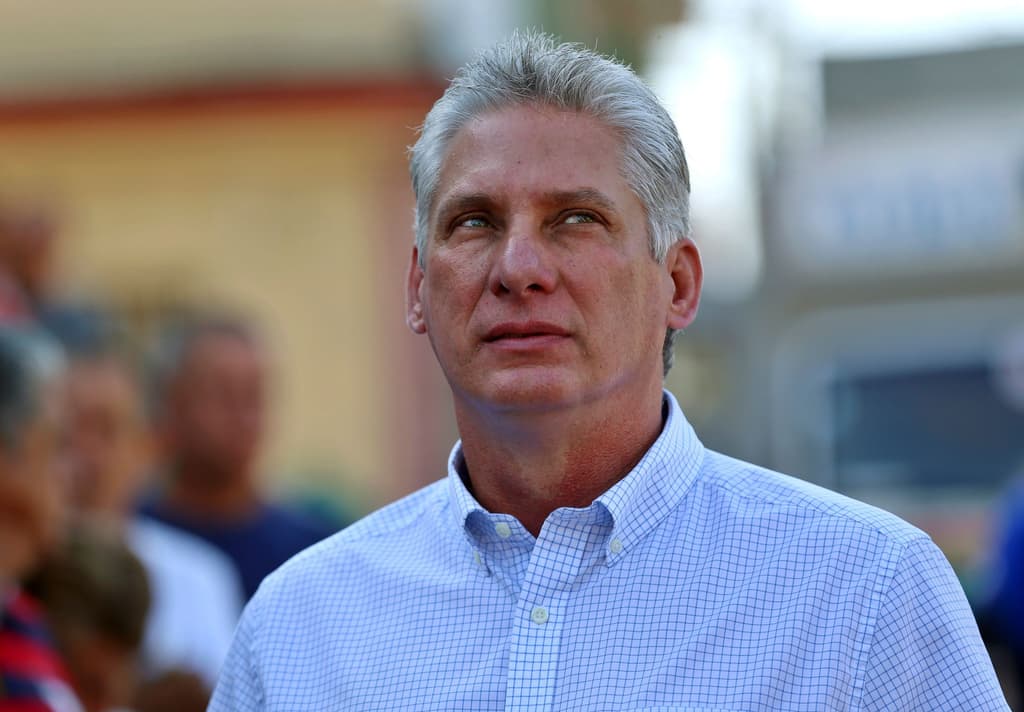
Beware of external links.
Beware of external links.
Frequently Asked Questions