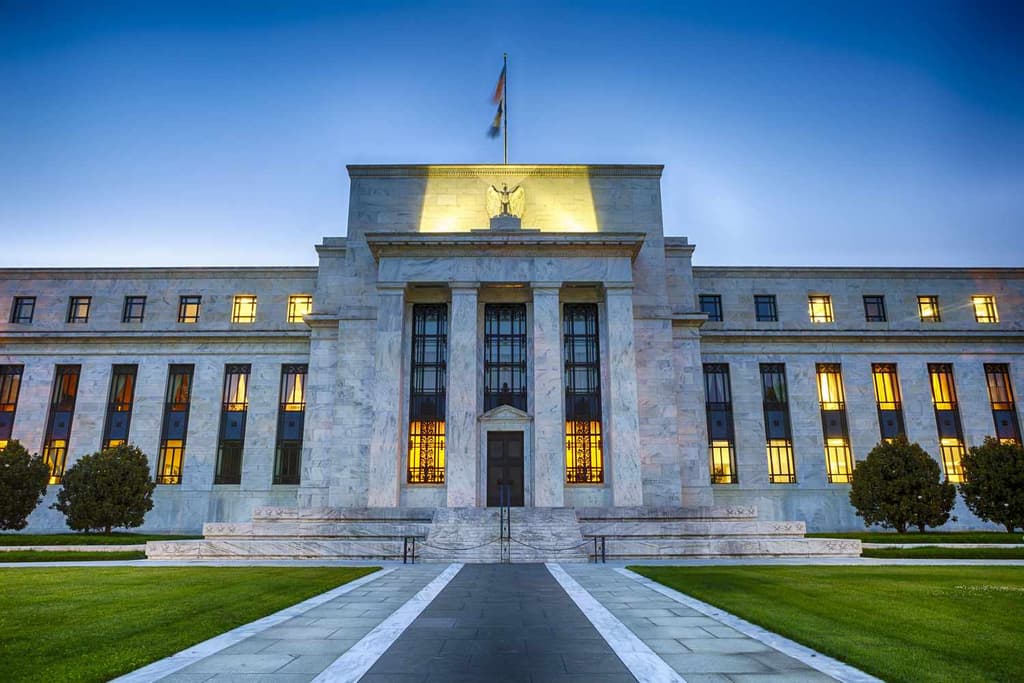
Trader consensus strongly supports a Pause–Pause–Pause sequence for the March–June 2026 FOMC meetings, reflected in the 99.4% market-implied probability. This reflects the Federal Reserve’s current restrictive stance, with the federal funds rate held steady amid resilient GDP growth, a tight labor market, and core PCE inflation remaining above the 2% target. Recent economic releases have shown limited progress toward the Fed’s goals, keeping market-implied odds aligned with official guidance against near-term easing. The June FOMC meeting and upcoming CPI or employment data represent the main near-term catalysts that could shift pricing, though any move toward a cut would require clear evidence of sustained disinflation or material weakening in economic conditions.
Resumen experimental generado por IA con datos de Polymarket. Esto no es asesoramiento de trading y no influye en cómo se resuelve este mercado. · ActualizadoPausar–pausar–pausar 99.3%
Otro <1%
Pausa–Pausa–Recorte <1%
$1,903,983 Vol.
$1,903,983 Vol.
Pausar–pausar–pausar
99%
Otro
1%
Pausa–Pausa–Recorte
<1%
Pausar–pausar–pausar 99.3%
Otro <1%
Pausa–Pausa–Recorte <1%
$1,903,983 Vol.
$1,903,983 Vol.
Pausar–pausar–pausar
99%
Otro
1%
Pausa–Pausa–Recorte
<1%
This market will resolve according to the decisions made by the next three Federal Open Market Committee (FOMC) meetings: March 17-18, 2026; April 28-29; and June 16-17.
A qualifying cut occurs when the new upper bound of the target federal funds rate is lower compared to the level it was prior to the respective meeting.
A qualifying hike occurs when the new upper bound of the target federal funds rate is higher compared to the level it was prior to the respective meeting.
A qualifying pause occurs when the new upper bound of the target federal funds rate is equal to the level it was prior to the respective meeting.
If the Fed publishes a different combination than any listed, this market will resolve to "Other". Any rate hike will be encompassed by "Other".
Emergency rate cuts outside the regularly scheduled meetings will not be considered.
The resolution source for this market is the FOMC’s statement after its meetings:
https://www.federalreserve.gov/monetarypolicy/fomccalendars.htm
The level and change of the target federal funds rate is also published at the official website of the Federal Reserve:
https://www.federalreserve.gov/monetarypolicy/openmarket.htm
Mercado abierto: Jan 29, 2026, 5:18 PM ET
Resolver
0x2F5e3684c...This market will resolve according to the decisions made by the next three Federal Open Market Committee (FOMC) meetings: March 17-18, 2026; April 28-29; and June 16-17.
A qualifying cut occurs when the new upper bound of the target federal funds rate is lower compared to the level it was prior to the respective meeting.
A qualifying hike occurs when the new upper bound of the target federal funds rate is higher compared to the level it was prior to the respective meeting.
A qualifying pause occurs when the new upper bound of the target federal funds rate is equal to the level it was prior to the respective meeting.
If the Fed publishes a different combination than any listed, this market will resolve to "Other". Any rate hike will be encompassed by "Other".
Emergency rate cuts outside the regularly scheduled meetings will not be considered.
The resolution source for this market is the FOMC’s statement after its meetings:
https://www.federalreserve.gov/monetarypolicy/fomccalendars.htm
The level and change of the target federal funds rate is also published at the official website of the Federal Reserve:
https://www.federalreserve.gov/monetarypolicy/openmarket.htm
Resolver
0x2F5e3684c...Trader consensus strongly supports a Pause–Pause–Pause sequence for the March–June 2026 FOMC meetings, reflected in the 99.4% market-implied probability. This reflects the Federal Reserve’s current restrictive stance, with the federal funds rate held steady amid resilient GDP growth, a tight labor market, and core PCE inflation remaining above the 2% target. Recent economic releases have shown limited progress toward the Fed’s goals, keeping market-implied odds aligned with official guidance against near-term easing. The June FOMC meeting and upcoming CPI or employment data represent the main near-term catalysts that could shift pricing, though any move toward a cut would require clear evidence of sustained disinflation or material weakening in economic conditions.
Resumen experimental generado por IA con datos de Polymarket. Esto no es asesoramiento de trading y no influye en cómo se resuelve este mercado. · Actualizado
Cuidado con los enlaces externos.
Cuidado con los enlaces externos.
Preguntas frecuentes