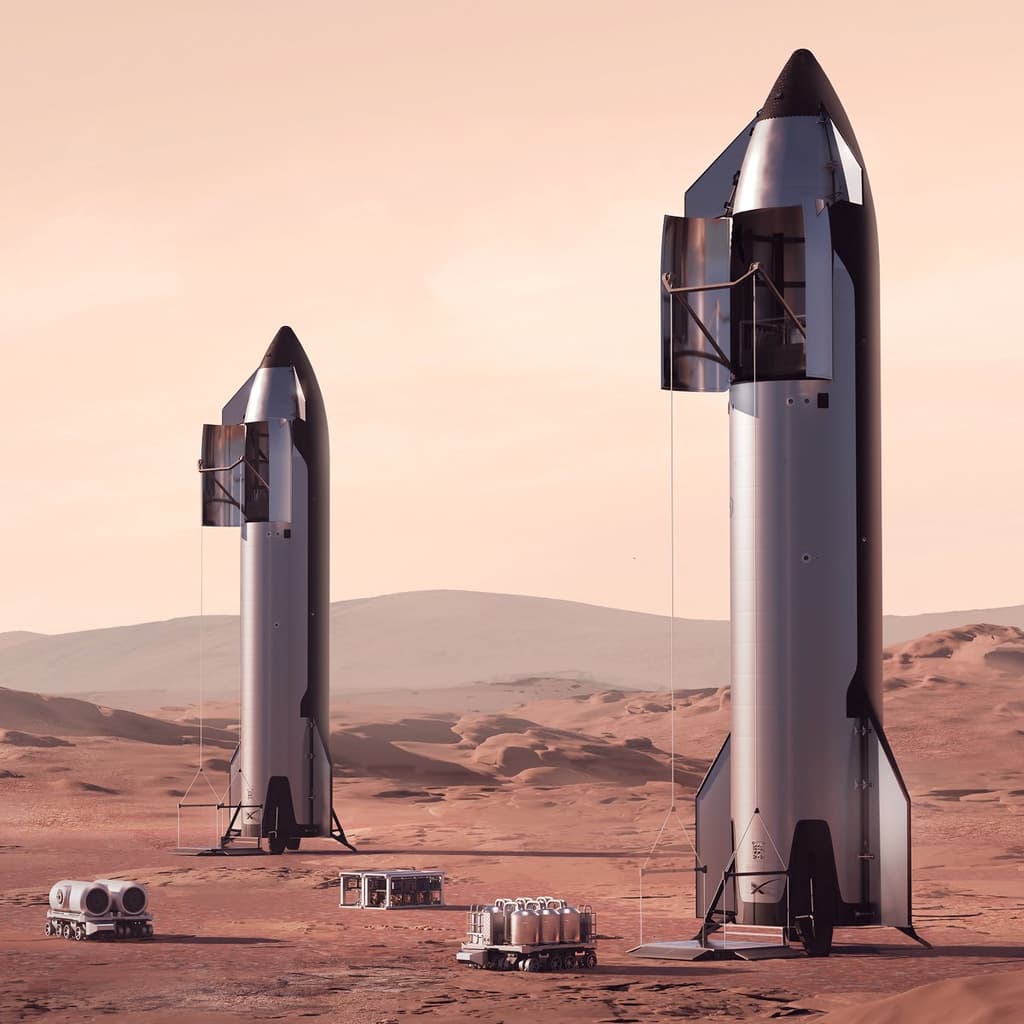
SpaceX's Starship V3 design now integrates docking drogues, probes, and propellant feed lines specifically for ship-to-ship operations, directly enabling the planned 2026 orbital refueling demonstration in which one tanker Starship will rendezvous and dock with another in low Earth orbit. Recent V3 hardware debuted on the May 2026 test flight, which added navigation sensors with Dragon heritage and confirmed the structural changes needed for in-space mating. Progress on rapid iteration, catch attempts, and weekly launch cadence will determine whether the first docking occurs before year-end; any further slips in V3 reliability or regulatory approvals for extended orbital maneuvers remain the main variables affecting market-implied odds.
Resumen experimental generado por IA con datos de Polymarket. Esto no es asesoramiento de trading y no influye en cómo se resuelve este mercado. · Actualizado$12,104 Vol.
31 dic 2026
December 31, 2026?
32%
December 31, 2027?
53%
$12,104 Vol.
December 31, 2026?
$12,088 Vol.
32%
December 31, 2027?
$16 Vol.
53%
This market will resolve to “Yes” if two SpaceX Starships successfully execute a docking maneuver in a stable Earth orbit between market creation and the listed date, 11:59 PM ET. Otherwise, this market will resolve to “No”.
A qualifying docking maneuver must physically join two vessels, matching in velocity, into a connected structure via mating hardware for at least 60 continuous seconds. The two vessels must be in stable Earth orbit with a perigee of at least 100 kilometers above the Earth’s surface.
The docking of any two SpaceX vessels which each serve as an integrated rocket-and-spacecraft and both equal or exceed Starship in scale will qualify regardless of their contents or variant (standard, tanker, depot, HLS, test article, etc.). The two vessels must be free-flying. Any capsule or payload carried to orbit exclusively atop a separate launch vehicle will not qualify. If either vessel is passively placed into the mating interface of the other vessel, that conjunction will not qualify.
The resolution source for this market will be a consensus of credible reporting.SpaceX's Starship V3 design now integrates docking drogues, probes, and propellant feed lines specifically for ship-to-ship operations, directly enabling the planned 2026 orbital refueling demonstration in which one tanker Starship will rendezvous and dock with another in low Earth orbit. Recent V3 hardware debuted on the May 2026 test flight, which added navigation sensors with Dragon heritage and confirmed the structural changes needed for in-space mating. Progress on rapid iteration, catch attempts, and weekly launch cadence will determine whether the first docking occurs before year-end; any further slips in V3 reliability or regulatory approvals for extended orbital maneuvers remain the main variables affecting market-implied odds.
This market will resolve to “Yes” if two SpaceX Starships successfully execute a docking maneuver in a stable Earth orbit between market creation and the listed date, 11:59 PM ET. Otherwise, this market will resolve to “No”.
A qualifying docking maneuver must physically join two vessels, matching in velocity, into a connected structure via mating hardware for at least 60 continuous seconds. The two vessels must be in stable Earth orbit with a perigee of at least 100 kilometers above the Earth’s surface.
The docking of any two SpaceX vessels which each serve as an integrated rocket-and-spacecraft and both equal or exceed Starship in scale will qualify regardless of their contents or variant (standard, tanker, depot, HLS, test article, etc.). The two vessels must be free-flying. Any capsule or payload carried to orbit exclusively atop a separate launch vehicle will not qualify. If either vessel is passively placed into the mating interface of the other vessel, that conjunction will not qualify.
The resolution source for this market will be a consensus of credible reporting.
A qualifying docking maneuver must physically join two vessels, matching in velocity, into a connected structure via mating hardware for at least 60 continuous seconds. The two vessels must be in stable Earth orbit with a perigee of at least 100 kilometers above the Earth’s surface.
The docking of any two SpaceX vessels which each serve as an integrated rocket-and-spacecraft and both equal or exceed Starship in scale will qualify regardless of their contents or variant (standard, tanker, depot, HLS, test article, etc.). The two vessels must be free-flying. Any capsule or payload carried to orbit exclusively atop a separate launch vehicle will not qualify. If either vessel is passively placed into the mating interface of the other vessel, that conjunction will not qualify.
The resolution source for this market will be a consensus of credible reporting.
Mercado abierto: Jun 11, 2026, 1:09 PM ET
Volumen
$12,104Fecha de finalización
31 dic 2028Mercado abierto
Jun 11, 2026, 1:09 PM ETResolver
0x65070BE91...This market will resolve to “Yes” if two SpaceX Starships successfully execute a docking maneuver in a stable Earth orbit between market creation and the listed date, 11:59 PM ET. Otherwise, this market will resolve to “No”.
A qualifying docking maneuver must physically join two vessels, matching in velocity, into a connected structure via mating hardware for at least 60 continuous seconds. The two vessels must be in stable Earth orbit with a perigee of at least 100 kilometers above the Earth’s surface.
The docking of any two SpaceX vessels which each serve as an integrated rocket-and-spacecraft and both equal or exceed Starship in scale will qualify regardless of their contents or variant (standard, tanker, depot, HLS, test article, etc.). The two vessels must be free-flying. Any capsule or payload carried to orbit exclusively atop a separate launch vehicle will not qualify. If either vessel is passively placed into the mating interface of the other vessel, that conjunction will not qualify.
The resolution source for this market will be a consensus of credible reporting.SpaceX's Starship V3 design now integrates docking drogues, probes, and propellant feed lines specifically for ship-to-ship operations, directly enabling the planned 2026 orbital refueling demonstration in which one tanker Starship will rendezvous and dock with another in low Earth orbit. Recent V3 hardware debuted on the May 2026 test flight, which added navigation sensors with Dragon heritage and confirmed the structural changes needed for in-space mating. Progress on rapid iteration, catch attempts, and weekly launch cadence will determine whether the first docking occurs before year-end; any further slips in V3 reliability or regulatory approvals for extended orbital maneuvers remain the main variables affecting market-implied odds.
This market will resolve to “Yes” if two SpaceX Starships successfully execute a docking maneuver in a stable Earth orbit between market creation and the listed date, 11:59 PM ET. Otherwise, this market will resolve to “No”.
A qualifying docking maneuver must physically join two vessels, matching in velocity, into a connected structure via mating hardware for at least 60 continuous seconds. The two vessels must be in stable Earth orbit with a perigee of at least 100 kilometers above the Earth’s surface.
The docking of any two SpaceX vessels which each serve as an integrated rocket-and-spacecraft and both equal or exceed Starship in scale will qualify regardless of their contents or variant (standard, tanker, depot, HLS, test article, etc.). The two vessels must be free-flying. Any capsule or payload carried to orbit exclusively atop a separate launch vehicle will not qualify. If either vessel is passively placed into the mating interface of the other vessel, that conjunction will not qualify.
The resolution source for this market will be a consensus of credible reporting.
A qualifying docking maneuver must physically join two vessels, matching in velocity, into a connected structure via mating hardware for at least 60 continuous seconds. The two vessels must be in stable Earth orbit with a perigee of at least 100 kilometers above the Earth’s surface.
The docking of any two SpaceX vessels which each serve as an integrated rocket-and-spacecraft and both equal or exceed Starship in scale will qualify regardless of their contents or variant (standard, tanker, depot, HLS, test article, etc.). The two vessels must be free-flying. Any capsule or payload carried to orbit exclusively atop a separate launch vehicle will not qualify. If either vessel is passively placed into the mating interface of the other vessel, that conjunction will not qualify.
The resolution source for this market will be a consensus of credible reporting.
Volumen
$12,104Fecha de finalización
31 dic 2028Mercado abierto
Jun 11, 2026, 1:09 PM ETResolver
0x65070BE91...SpaceX's Starship V3 design now integrates docking drogues, probes, and propellant feed lines specifically for ship-to-ship operations, directly enabling the planned 2026 orbital refueling demonstration in which one tanker Starship will rendezvous and dock with another in low Earth orbit. Recent V3 hardware debuted on the May 2026 test flight, which added navigation sensors with Dragon heritage and confirmed the structural changes needed for in-space mating. Progress on rapid iteration, catch attempts, and weekly launch cadence will determine whether the first docking occurs before year-end; any further slips in V3 reliability or regulatory approvals for extended orbital maneuvers remain the main variables affecting market-implied odds.
Resumen experimental generado por IA con datos de Polymarket. Esto no es asesoramiento de trading y no influye en cómo se resuelve este mercado. · Actualizado
Cuidado con los enlaces externos.
Cuidado con los enlaces externos.
Preguntas frecuentes